
Jan 22,2026 Arrowtown, A Tale of Two Cities
Continuing our travel over the Crown Range towards Queenstown we stopped in the tourist center of Arrowtown, an 1860’s gold mining town. Surrounded by mountains it is a picturesque village preserving it’s gold-mining era buildings and identity (mining tourists now!).
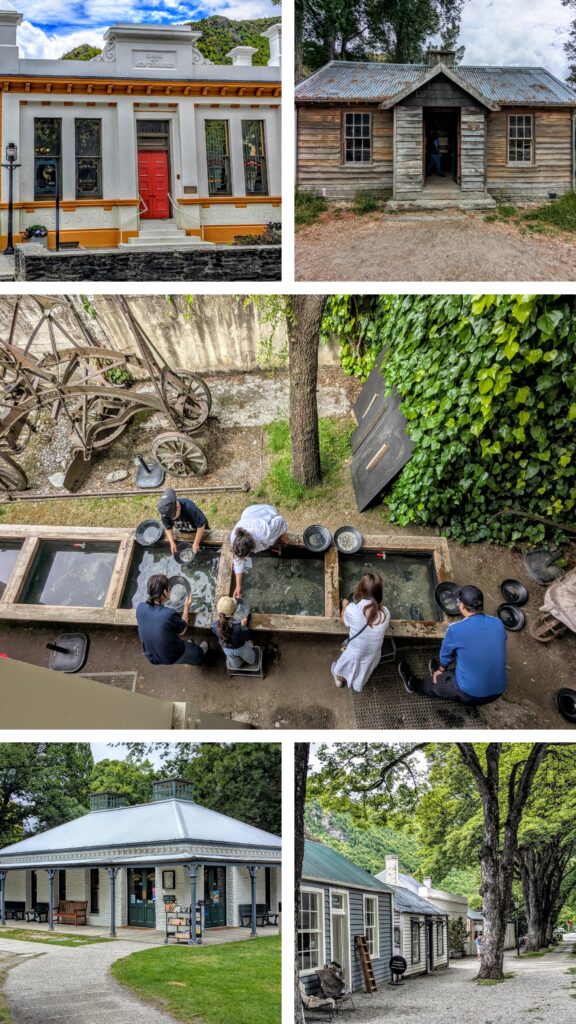
Some of the notable structures in town. The bank of New Zealand, one wooden building from the police camp, tourists ‘panning for gold’, An iconic NZ 1860’s style building housing the library and a block of simple miner’s shacks.
By the 1870’s the easy pickings were gone and the European miners moved on to new strikes elsewhere. The town shrank and resorted to inviting Chinese miners from the played-out gold fields of Australia to work the claims in Arrowtown. Invited, but not welcome, the Chinese were relegated to the fringes of the community. There they created their own space, erecting shacks utilizing discarded or natural materials. They even terraced the hillside and grew gardens, selling their extra produce to their white neighbors. The “Chinatown” has been preserved as well and plenty of signage describes life for the bachelor miners.
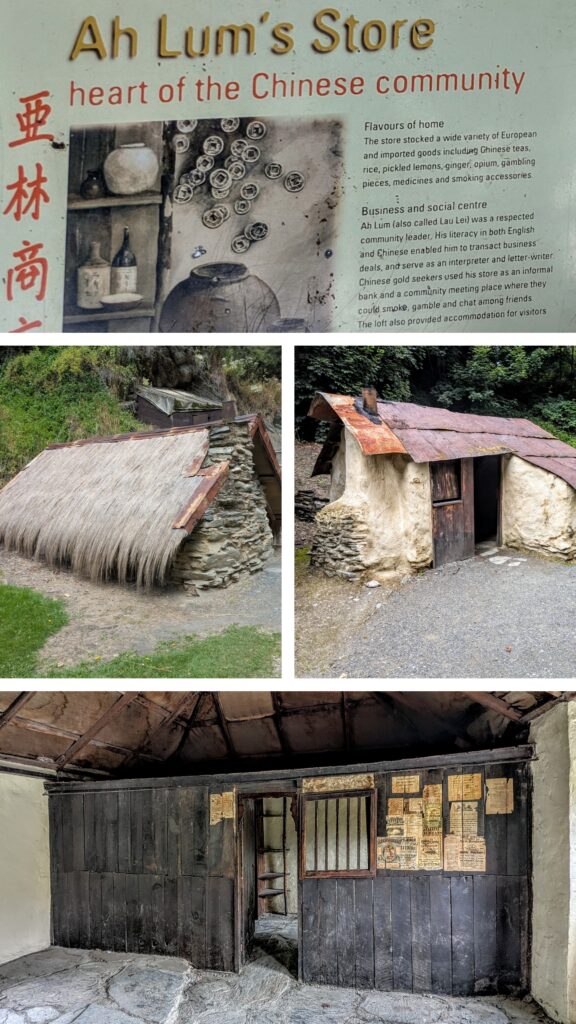
Two of the miners’ huts, one with a tin roof, the other with a thatch roof, look similar to farmers’ huts in Ireland. Ah Lum’s Store was the ‘heart of the community’.
I couldn’t help but notice the similarities to the Chinese experience in Oregon around the same timeframe. Preserved and interpreted in John Day Oregon is the Kam Wah Chung & Company Museum. Active from the late 1860’s until 1952 with the death of it’s last proprietor, Ing Hay (or ‘Doc’ Hay as he was known, being an herbalist and practitioner of traditional Chinese medicine), serving the Chinese miners who flocked to the gold fields around Canyon City, Oregon. The Chinese workers in both NZ and Central Oregon were generally from the Guangdong Province in China, and their communities were centered around stores that could provide them with familiar Chinese goods as well as social camaraderie.