
Nov 20, 2026 Kaituna Track
Today we tackled a short section of the Kaituna Track, a delightful walk on a beautiful day! The track was heavily damaged by a cyclone in 2018, but restored to usability soon after. However, it has no huts and is generally thought of as a long day trip, taking 8-9 hours one way, meaning you would need transport to or from one end or the other, so it is not a heavily used track. We opted for the 2-3 hour return hike to Kaituna forks where the two main tributaries of the Kaituna converge.
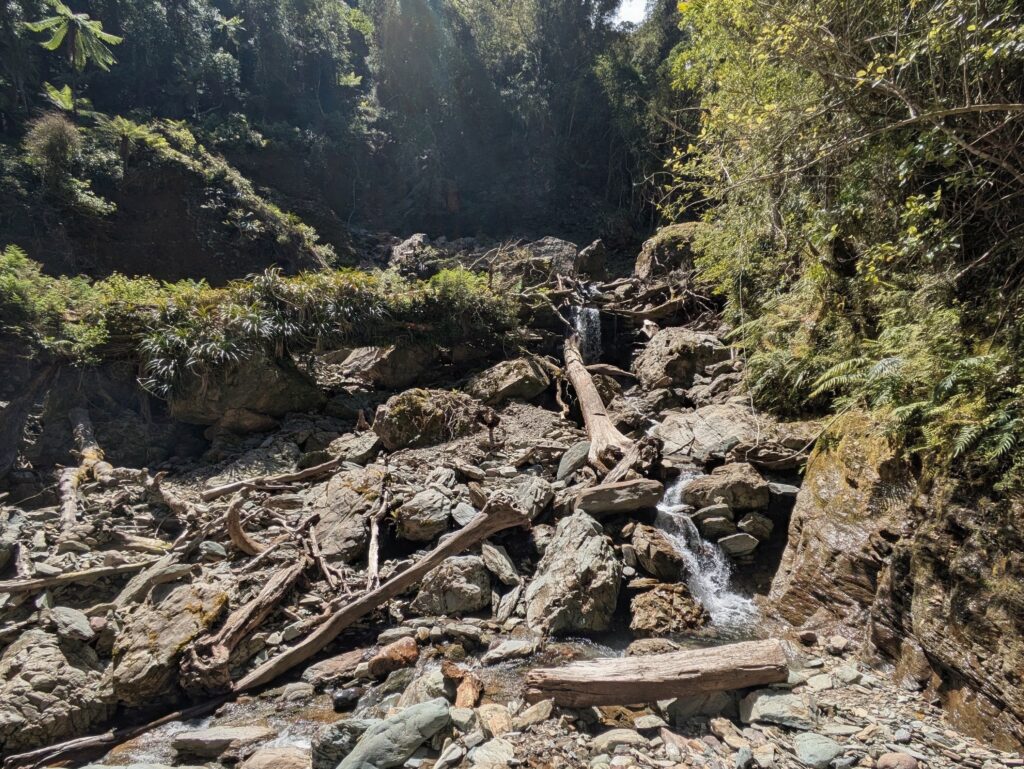
The main slip or landslide, damage from the 2018 cyclone.
We had a wonderful hike aside the river, ascending along a ridge, looking down on the brown tinted water, until we came upon this ‘slip’ as they refer to a landslide. This one is of enormous proportions! The tree trunks are huge, the boulders are the size of cars! We had to pick our way around the boulders, over the stream and under the fern bedecked tree trunk in the middle of the picture, with only a slight stoop to get under it!
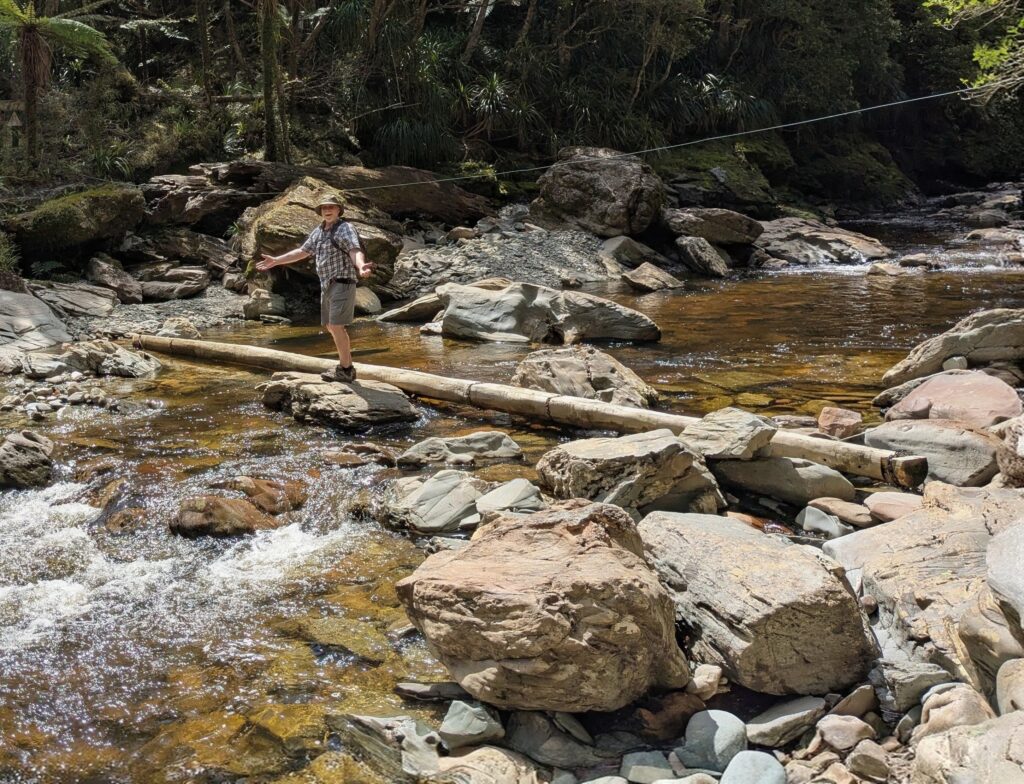
The log ‘bridge’ to get over the stream. Or you could use the hiking staffs provided and wade across the stream, which is impassable if in flood!
We reached Kaituna Forks and crossed the stream. The river is home to ‘tuna’, the Maōri name for the longfin eel, an historic staple of the Maōri diet. ‘Kaituna’ means ‘to eat eels’ and multiple rivers in Aotearoa/NZ are named Kaituna and prized as abundant eel fisheries, although the species is in decline. We stopped here for lunch of, ironically, tuna sandwiches, the canned ocean fish variety! Here the track diverged, one way being a trap line manned by local volunteers to eradicate invasive predators, rats and weasels, the other way being an uphill, overgrown track up Knucklehill. We continued a short way along the trap line that followed the river, until we hit our 2.5 mile mark and turned around.
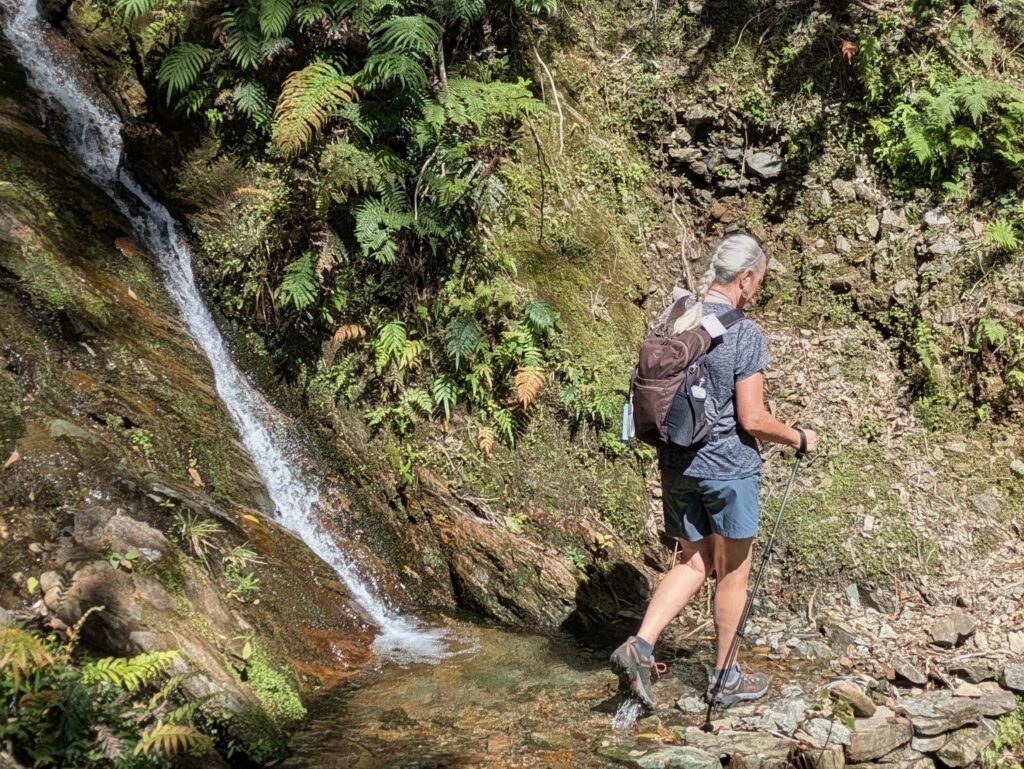
Small streams and waterfalls crossed the track.
The track was again an 1850’s pack-horse route built to access the Kaituna goldfields. At the beginning of the track there is evidence of old mining work, with remnants of gold sluicing, water races, tailing piles and a small mine or cave. Although worked periodically into the late 1800’s the field ultimately produced little gold, but the track remains as a great walk to experience the lush forest and the quiet solitude of nature.