Dec 15, 2025 Cape Kidnappers Part 1
We got up before sunrise, had breakfast and headed out for a 20 minute drive to the trailhead before dawn. We had to start our hike no sooner than 3 hours after high tide which was at 2:30am. And we had to return from the 5 hour round trip hike before the next high tide at 2:30pm!
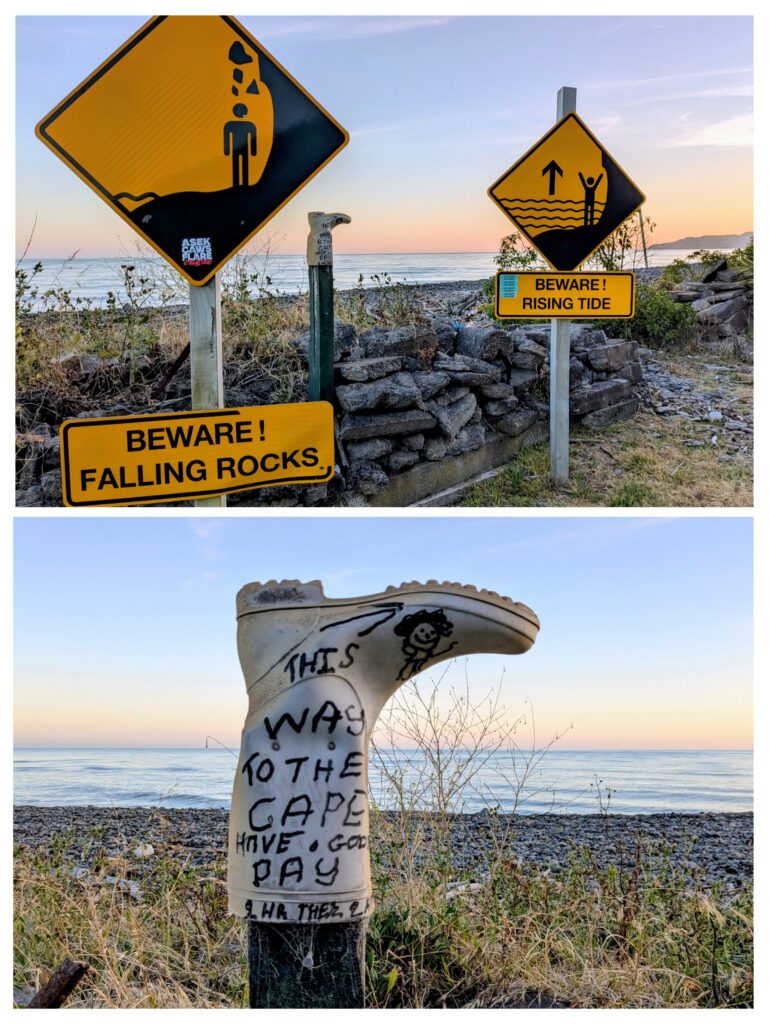
We’ve been warned!

The sun rose over the cliffs of the cape, but we were walking towards it, so we kept ahead of the sunrise and walked the 5 miles to the end of the trail in the shade!

The sun highlighted the tip of the cliff with a golden cap over the many layers of sandstone, conglomerate, mudstone, river gravel, pumice and silt, and very prone to erosion!
Dec 13, 2025 Puppies and Alpacas
Today a friend of a friend took us to another friend’s ‘lifestyle block’ to visit with puppies and alpacas! A ‘lifestyle block’ in NZ is what we would call a ‘ranchette’, a small property in the country where you can raise a few animals or some vegetables, move away from the city life and have a country life experience.
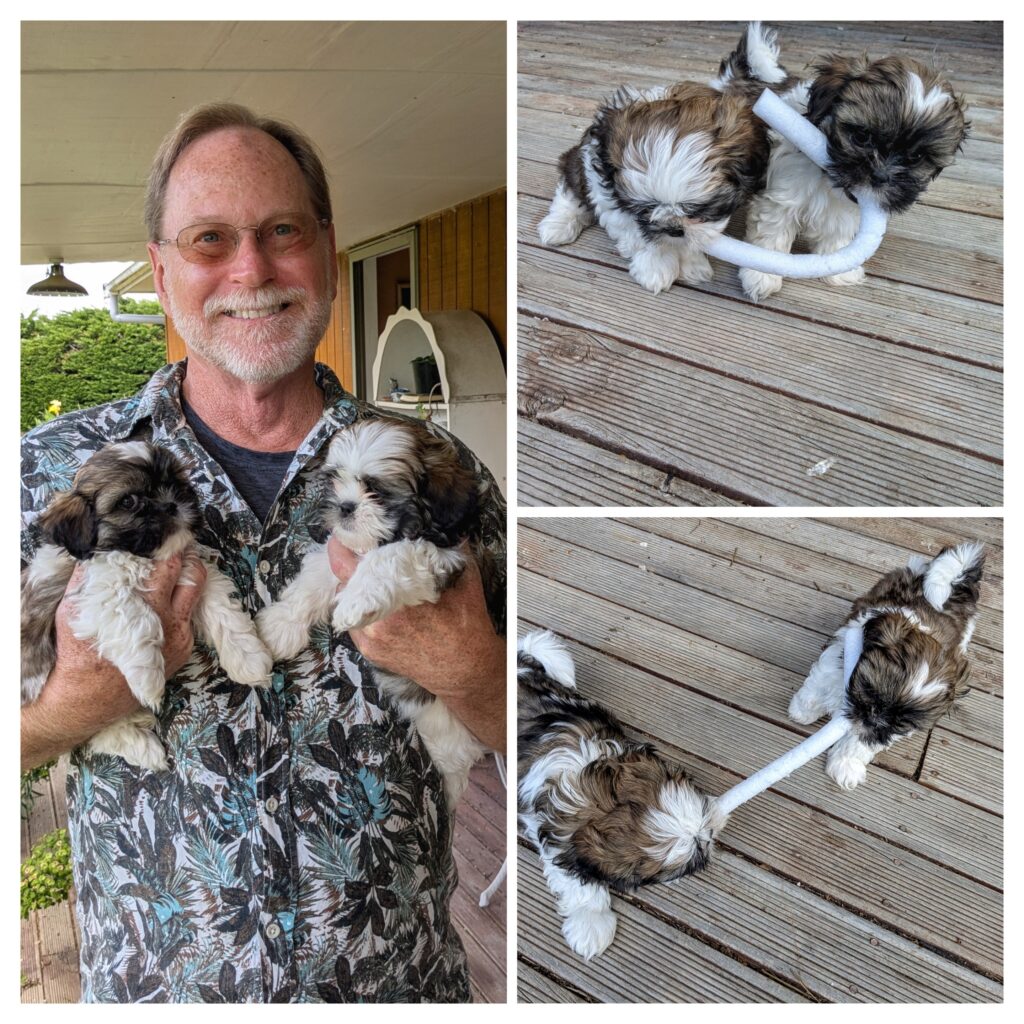
The owner of this property is raising a litter of 4 Shih-Tzu/Pomeranian puppies! The cutest little puppies!
However, the main attraction is the herd of 34 Alpacas out in the paddocks! One breeding male with about 20 females and 4 newborns in one paddock. Another paddock held the 8 yearling males that are removed to protect them from the alpha breeding male! All but one of the Alpacas had recently been shorn for the fibre (not called wool on alpacas) which is sold for processing and knitting similar to sheep’s wool.
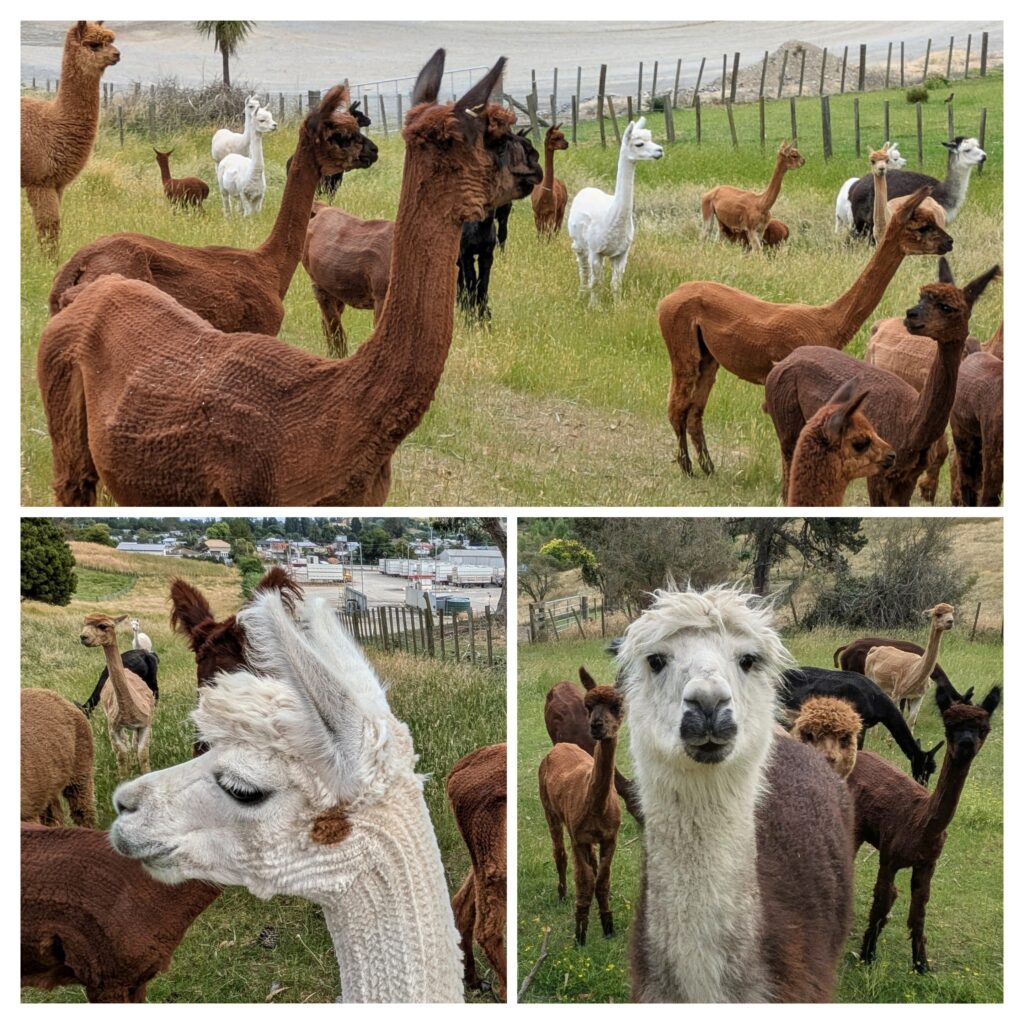
All but one of the herd of females were intently watching one of the Shih-Tzu adult dogs patrolling the perimeter of the paddock! The white alpaca is named Spot and was hand raised, she was least afraid of us and even let us scratch and pet her. Giraffe, the unshorn white and gray Alpaca hid while the rest were herded to the barn for shearing, when she was found she sat down and wouldn’t move, thus avoiding the trauma of a haircut! The other unshorn is the male, at the top left of the top picture. He was just too much to handle so the shearer let him run free!
Dec 12, 2025 A Windy Day at the “Longest Place Name in the World”
The longest title to a post on this blog! We attempted a bike ride this morning, riding south into the wind, but gave up and let the wind push us back to the B&B! We decided to take a road trip instead, to some remote beaches one and a half hours drive south. We reached Te Paerahi Beach near the tiny town of Pōrangahau and had a quick walk on the beach.
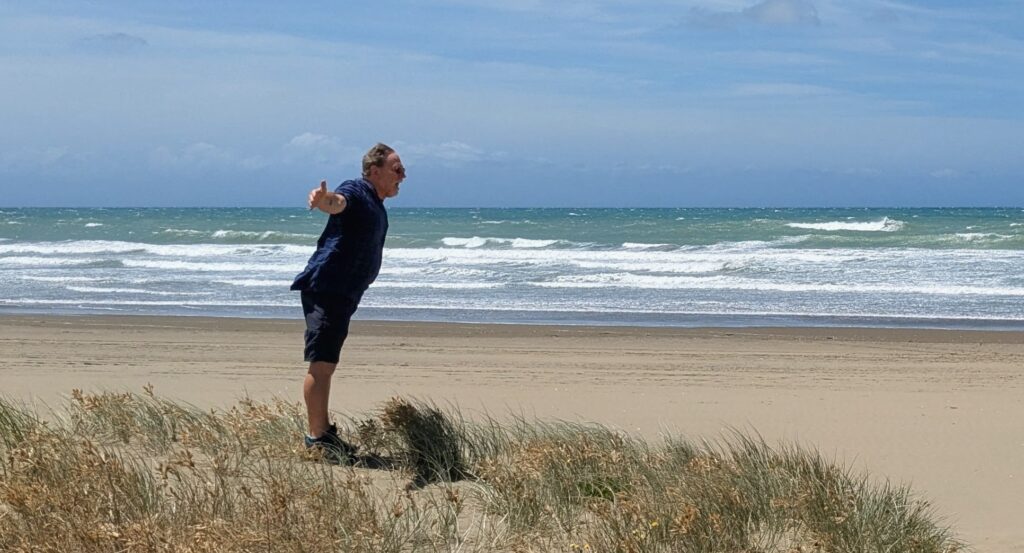
No wading in the surf today, we didn’t want to get sand-blasted!
We looked at the map (paper) and google maps and discovered that we were about a 15 minute drive from “the longest place name in the world”! So of course we had to go see it!
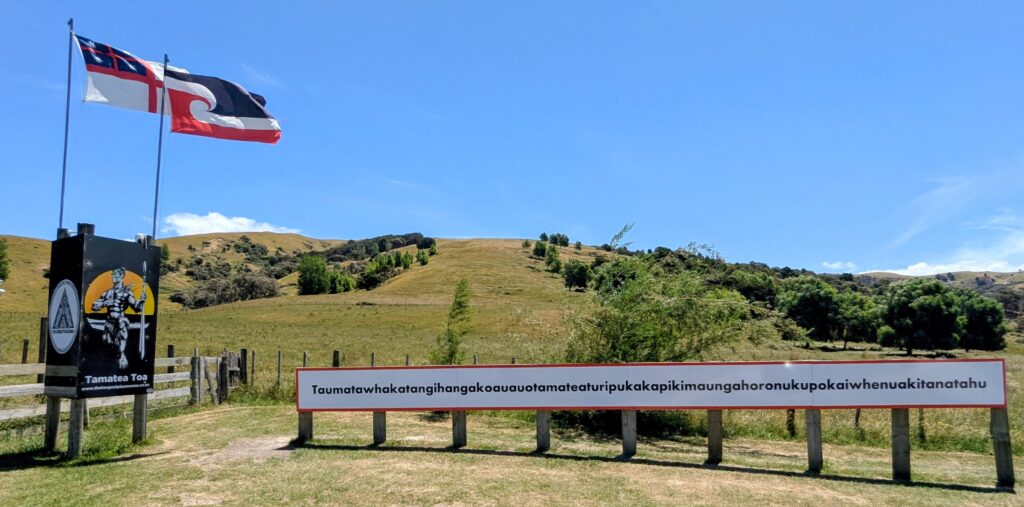
I won’t try to pronounce it or write it out! It’s actually the hill in the background.
According to several sources it translates to; “the summit where Tamatea, the man with the big knees, the slider, climber of mountains, the land-swallower who travelled about, played his nose flute to his loved one.”
We backtracked and headed over gravel roads to another beach, Blackhead Beach for a late lunch.
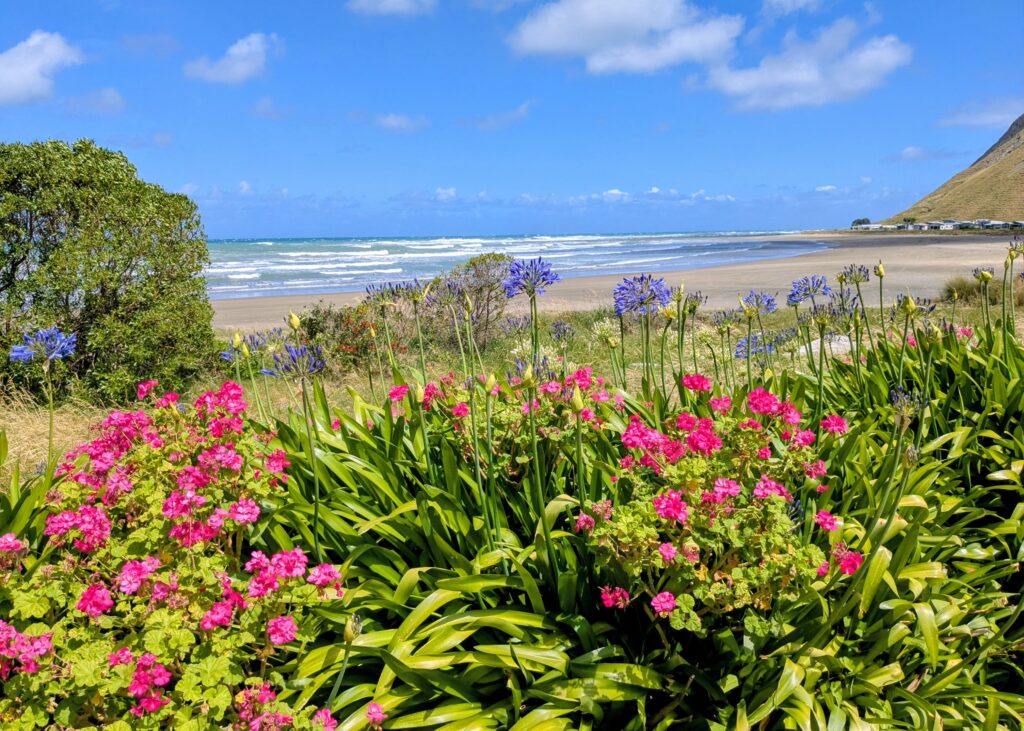
We enjoyed the view from the Blackhead beach campground and picnic area, with the colorful flowers blowing in the wind!
Dec 10, 2025 Lake Tutira
We headed inland a little bit today to find a walk hopefully in the shade, it’s forecast to be a hot sunny day! An hour north on Highway 2 we stopped at Lake Tūtira in the coastal hills.
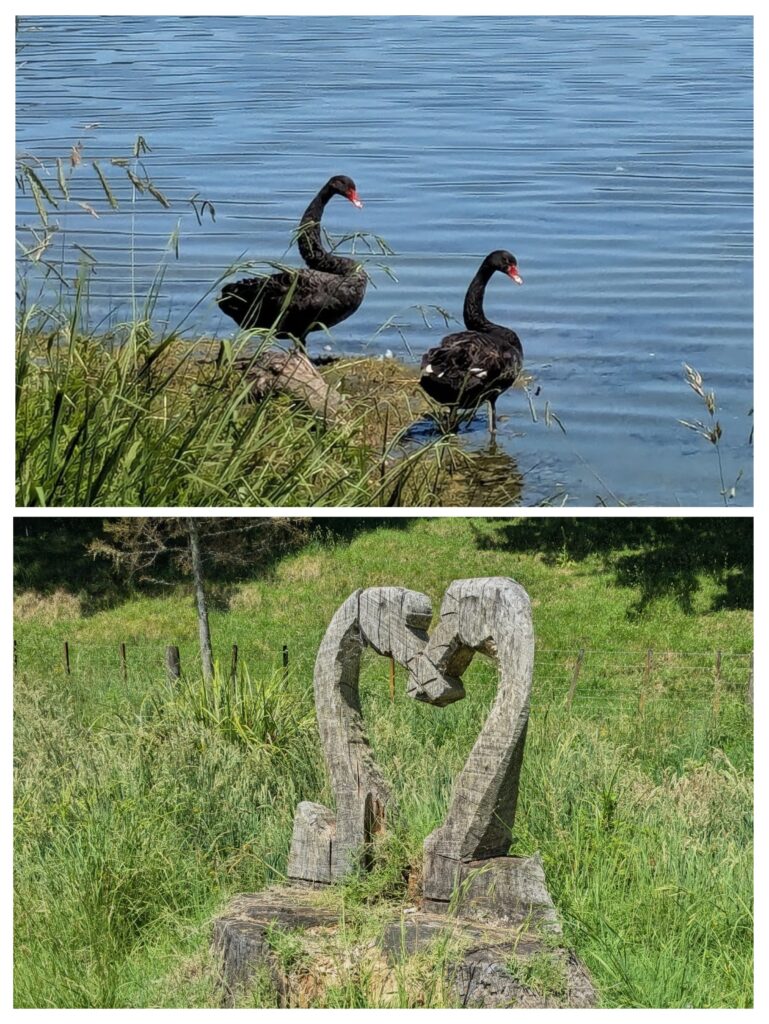
The lake looked cool and refreshing and is home to several black swan pairs as well as other ducks. They must be frequent visitors to have a carving of them in the campground field next to the lake!
We found a trail that went up through a shaded valley towards Table Mountain Track. The thick bed of dry leaves underfoot made our progress very noisy so we were surprised to see a kerurū in a tree not far from the trail. It watched us as we walked up the switchback trail to almost level with it! The kerurū, also known as a wood pigeon, is a large native bird that feeds mainly on fruit from native trees, leaves, flowers and buds. Its population is in decline and hunting of it is illegal. We’ve seen them on other forested trails and their flight through the woods is noisy!
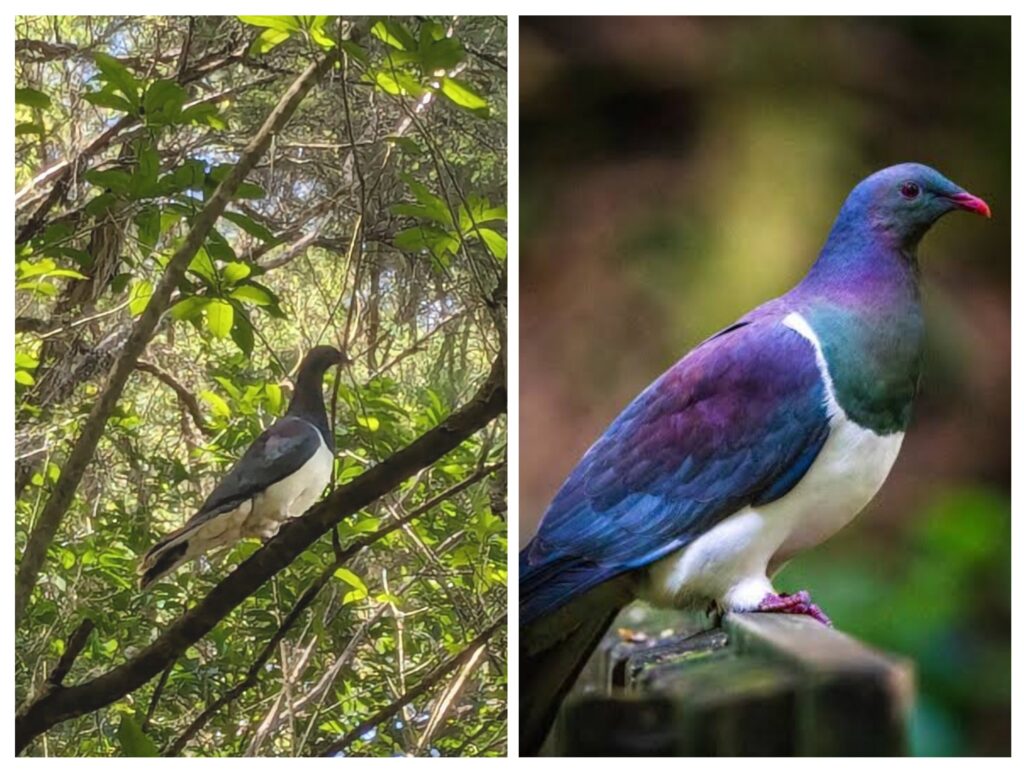
My picture of the pigeon is on the left, I lifted the picture on the right from the internet, showing off the glossy colors of the bird in the right lighting!
We emerged from the shaded valley onto the grassy slopes of the hillside and hiked up in the blazing sun.
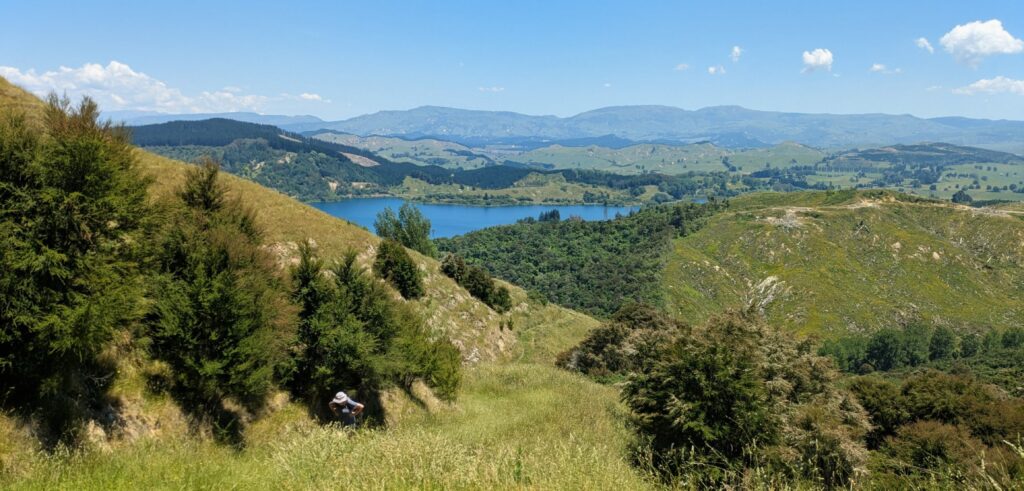
We waded through dry, tall grasses for awhile until we decided we wanted to be back in the shade! We enjoyed the view and the warm breeze then headed back down!
Dec 9, 2025 Bike Ride
We finally took a full on bike ride! There was a breeze, but not strong, so we rode south on the dike that protects the ‘fruit bowl’ of New Zealand from the ocean. The ride follows the waterfront past Haumoana Beach through the tiny hamlets of Haumoana and Te Awanga and terminates at Clifton Station, a large sheep & cattle station occupying the hills and onto the cliffs of Cape Kidnappers.
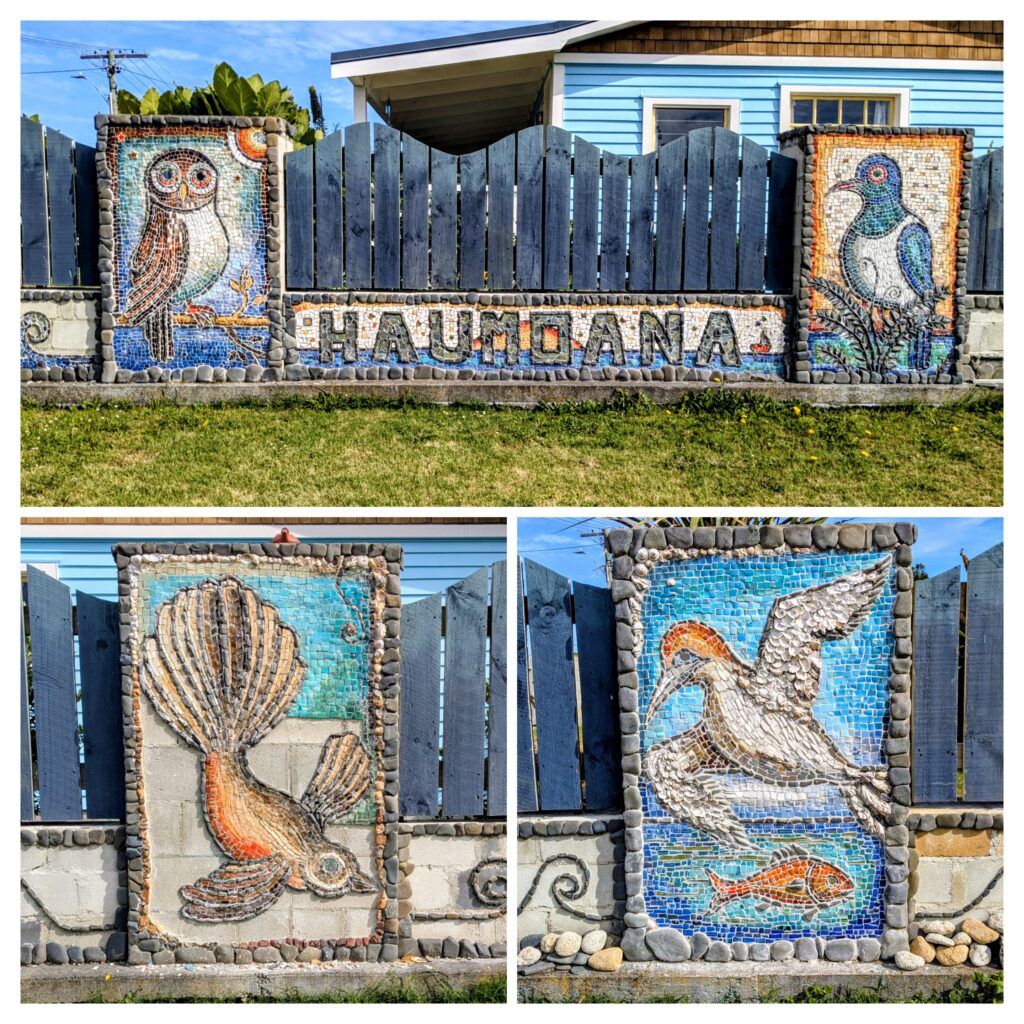
Passing through Haumoana we spotted this fence with colorful mosaics of native birds.
At the end of the trail we stopped at Hygge, an open air café looking out toward the ocean, for delicious coffee and muffins. Pronounced ‘hyoo-gah’, “Hygge is a Danish and Norwegian term that describes a cozy, contented mood created by comfort and conviviality, often associated with enjoying time with loved ones in a warm atmosphere. It embodies simplicity, togetherness, and the appreciation of life’s small pleasures”. (Wiki)
Across the road from Hygge there is a collection of older buildings labeled “Clifton Station”, a sheep and cattle ranch run by the Gordon family since 1861!
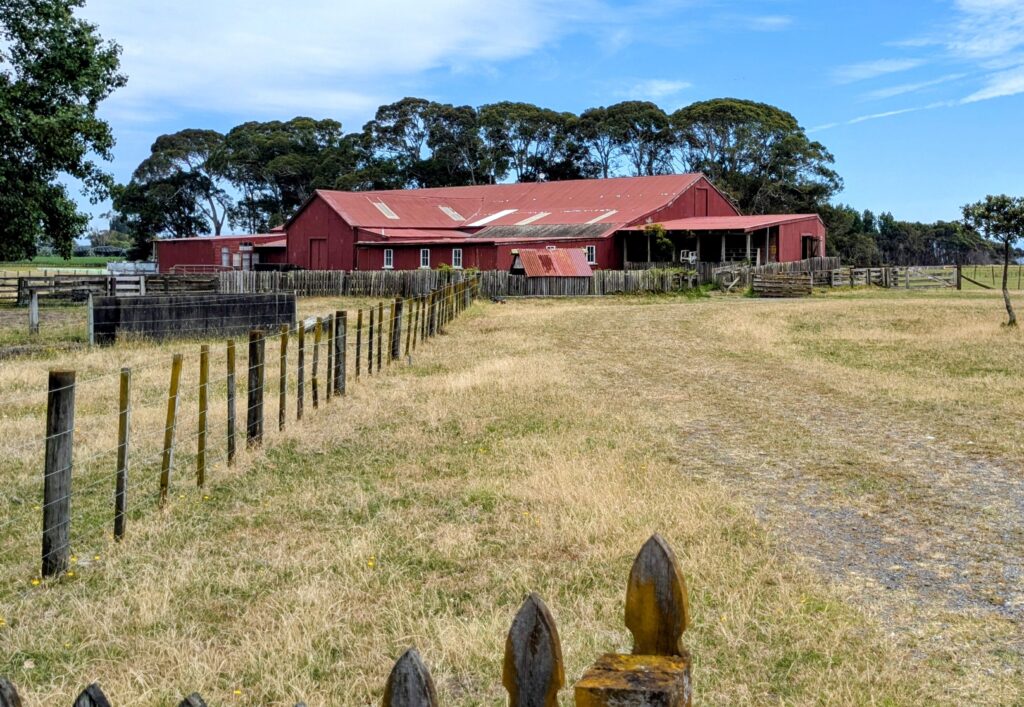
The Clifton Station woolshed was the site of tours featuring sheep-shearing, sheep-mustering and other farm work until Covid put a stop to it. Since then the Station has added a glamping experience to its roster of farming enterprises.
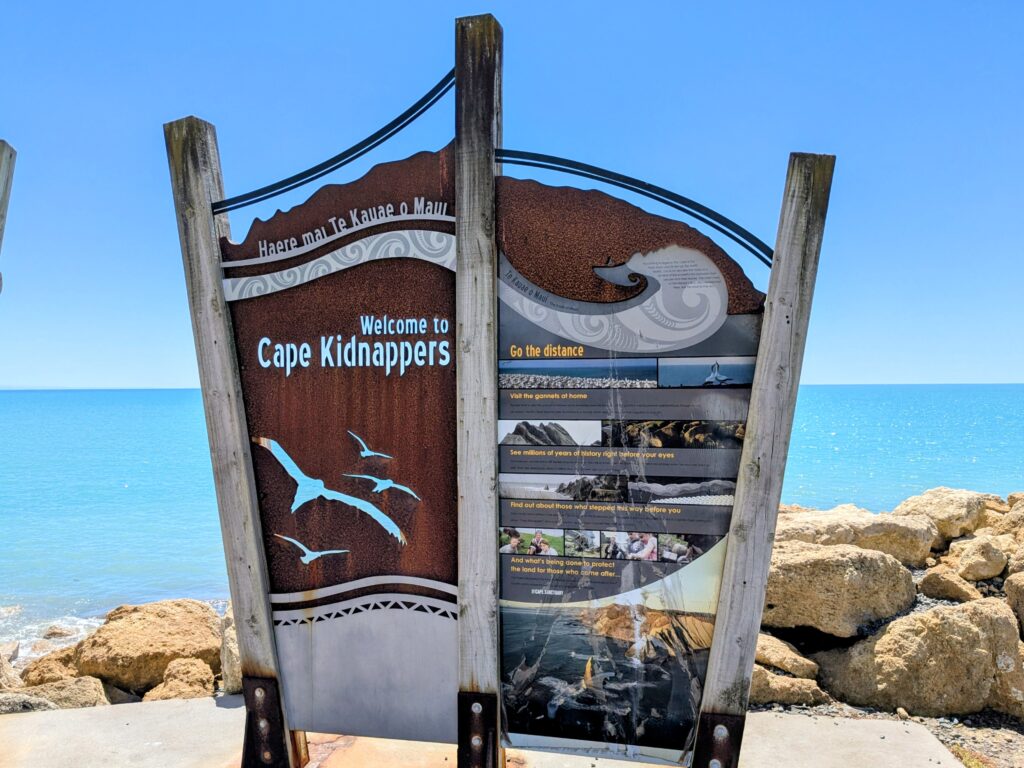
The end of the road is the beginning of the walking trail around Cape Kidnappers. We’ll save that for another day
