August 30 London/Dublin ( Day 338)
Bright and early we were up and I was packed to head to Dublin, Ireland. Robert will stay near London while I join family in Dublin for a week of meeting Irish relatives and exploring ‘the old country’!

At Heathrow the souvenir shops have all things royal!
The flight from London took only an hour and I was able to wait at the Dublin airport for other family members who’s flight had been delayed by 2 hours! Finally we all connected, collected our rental car and met at our accomodation.
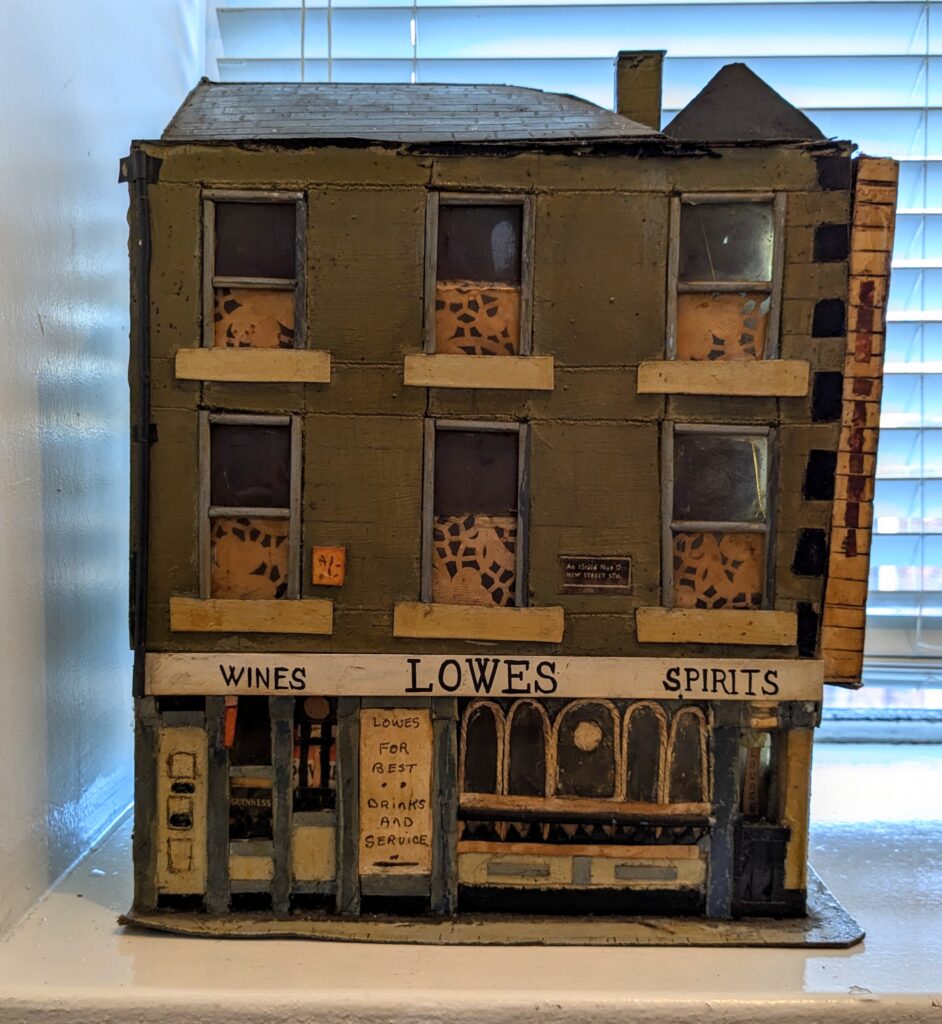
A model of the building where we stayed in the 2 story apartment above ‘Lowes Pub’ in Dublin. Quite by accident the Fallon siblings met in Dublin and stayed above the pub with the name of our maternal family moniker!
Despite the flight delay and the interminable wait for the car rental we had time to walk from our apartment into Dublin proper for dinner at The Brazen Head Pub, touted as Dublin’s oldest Pub!
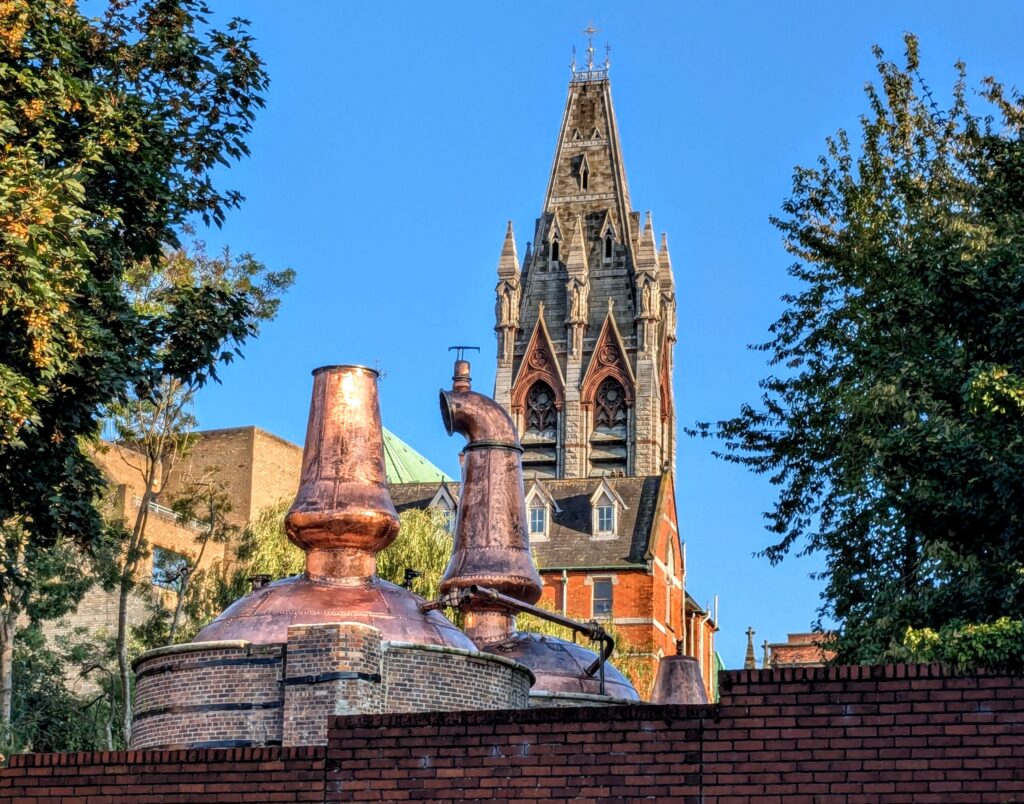
On the way to dinner we passed 2 symbols of Ireland’s ‘religions’; whiskey distillery pot stills, and a church spire!
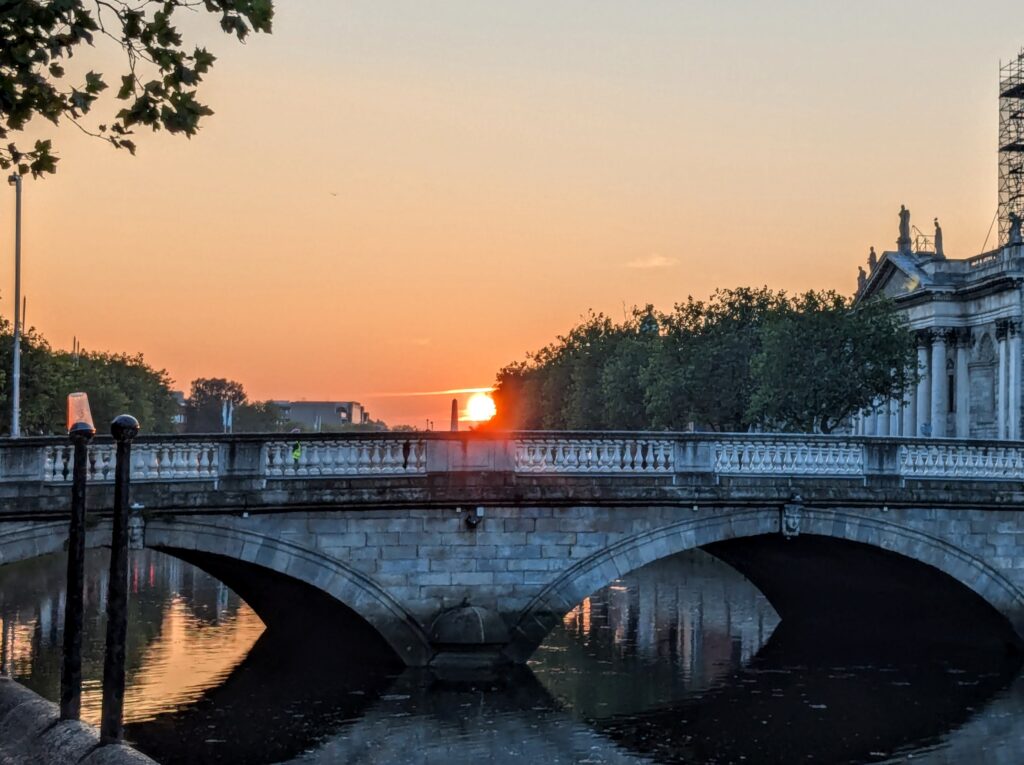
We strolled along the Liffey river as the sun set…
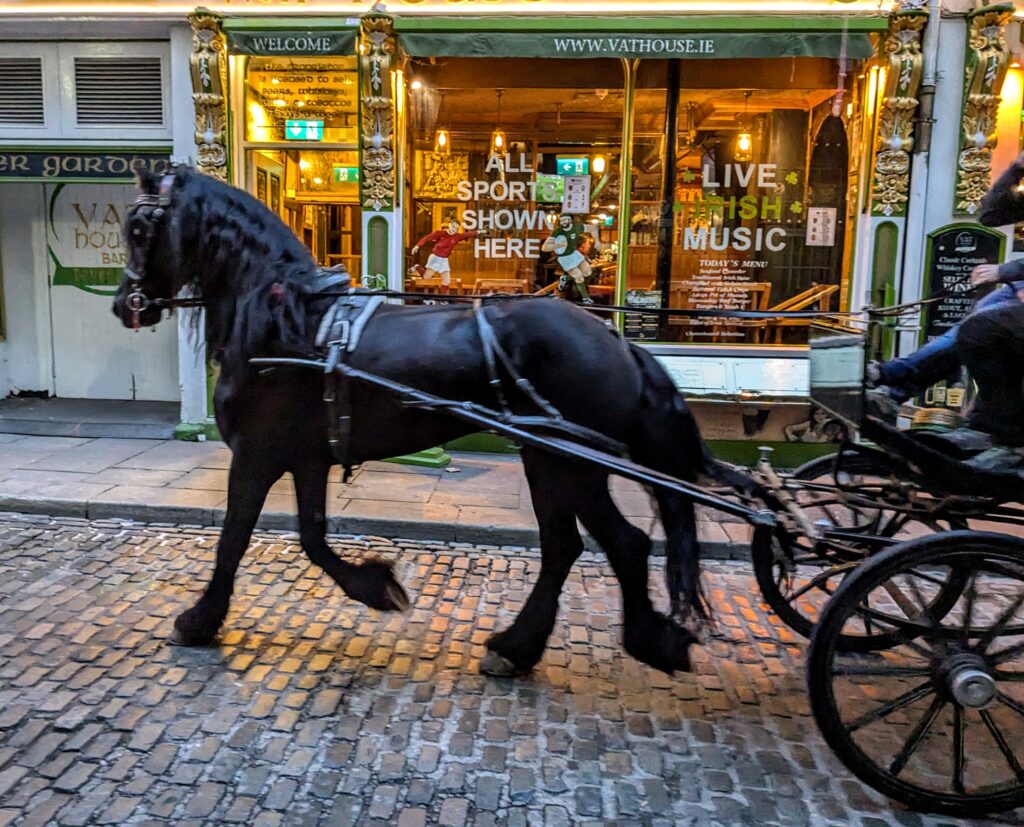
…and heard the clip-clop of horses pulling carriages on the cobblestone streets!
August 29 Oslo-Helsinki-London (Day 337)
From Above! We spent the day traveling! A very early bus ride took us to Oslo airport where we caught our flight east to Helsinki, Finland. We flew on Finnair, so we had to go through their hub in Helsinki.
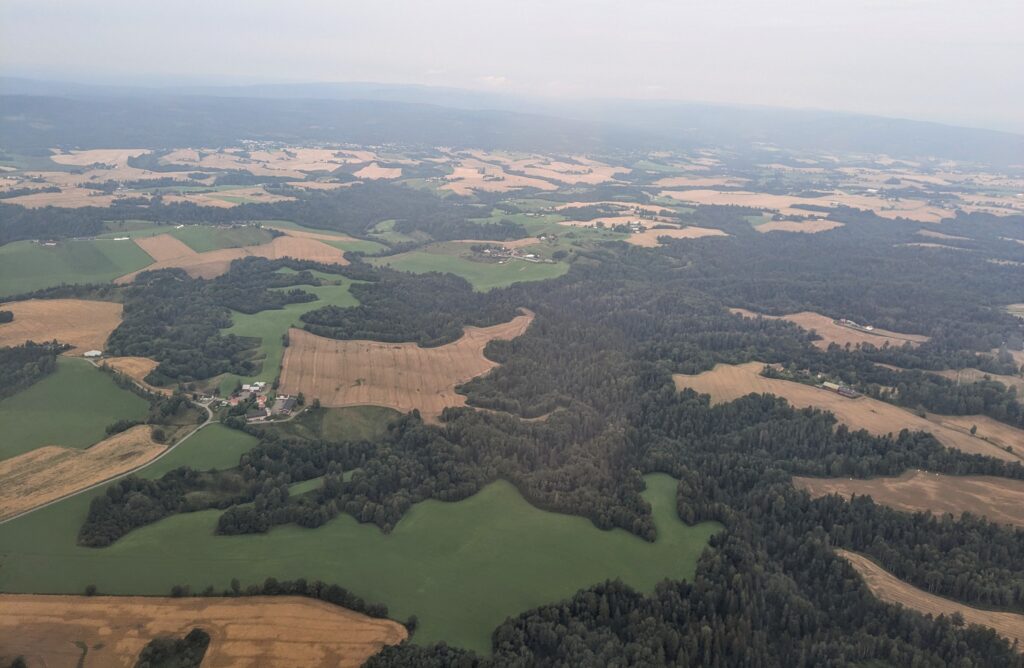
Leaving Oslo, we flew over the dark green Norwegian woods, checkered with fields of ripe golden grains.
We had a 3 hour layover in Helsinki which we were able to spend in the Finnair lounge, snacking from their food and beverage buffet.

We didn’t have much of a view outside at the airport.
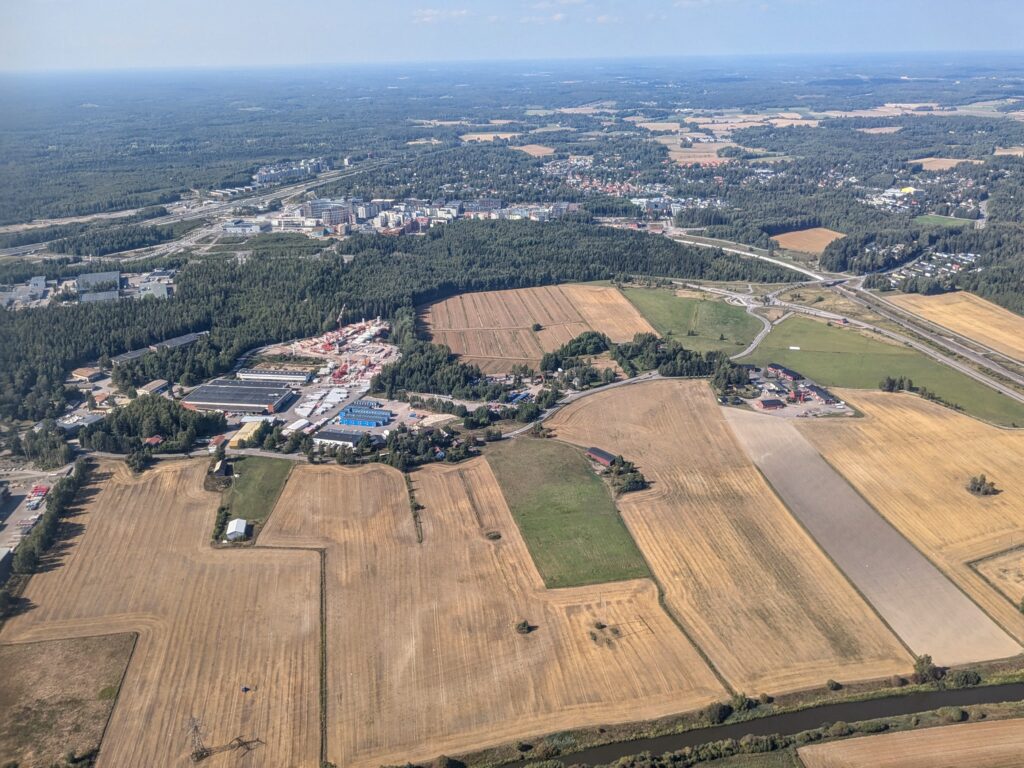
Leaving Helsinki, we had long views over fields interspersed with industrial sites, and the boreal forest stretching into the distance.
We had a 4 hour flight from Helsinki back west to London.

As we approached London we were between 2 layers of clouds and we could see the Thames river snaking across the landscape below.
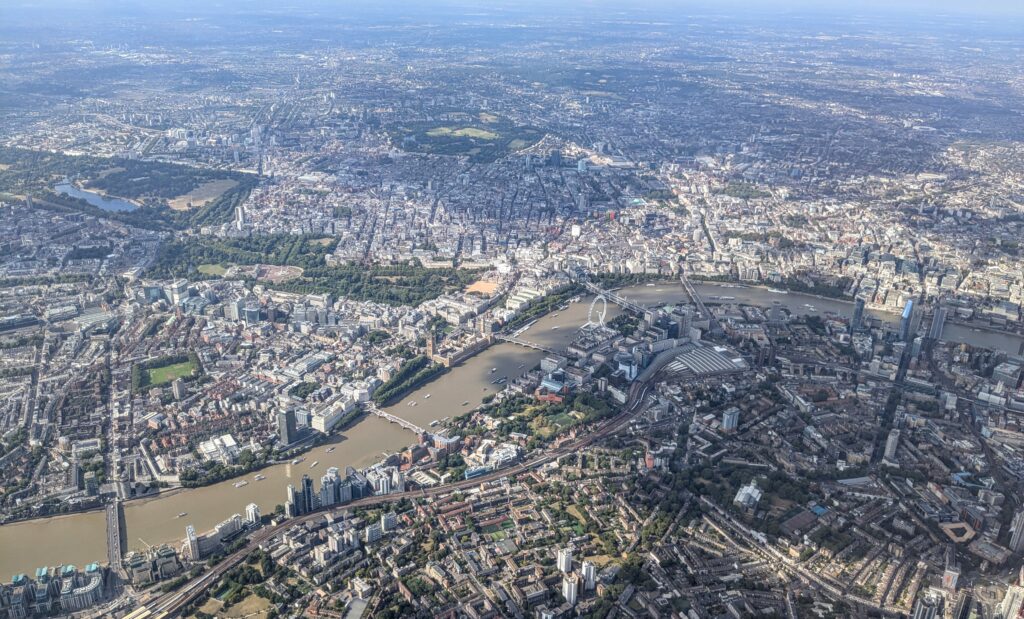
As we flew over London, descending towards Heathrow airport, the clouds dispersed revealing a fantastic view of the city! How many landmarks can you spot?
One final mode of transport, a city bus, took us to our Airbnb in Slough (pronounced sl’how’) with plenty of daylight to do some food shopping. Our host drove us the few blocks to the closest store where we got some staples and we walked back in the uncharacteristically hot and sunny weather!
August 28 Ullensaker (Day 336)
All around us I see references to ‘Ullensaker’, I thought we were in Jessheim! It turns out that Ullensaker is like a county, Jessheim is the town. Ullensaker (translates as ‘woolen items’) predates the town by many years, in fact the train station here predates the town! The station was built in 1854 on the train line from Oslo going north to Eidsvoll, at the south end of Mjøsa Lake. The town built up around the station and became the center for commerce and regional services. Predating all of the present infrastructure is an ancient mound, just a 30 minute walk from our apartment!
Rakni’s Mound “is the largest free-standing prehistoric monument in Norway and is one of the largest barrows (burial mounds) in Northern Europe.” We started out on the city streets heading for the site.

We came upon this symbol on a post as we started down a paved path paralleling a busy road.
This is the marker for the St. Olav Ways, a pilgrimage route from Oslo to Nidaros Cathedral in Trondheim, burial place of St. Olav.

The pathway turned to gravel and passed several old farmhouses and this large farm.
Part of the farm buildings have become a hostel for hikers on the pilgrimage path. This farm is prehistoric! It predates written history, way back in Viking times!

The path narrowed and entered a wooded area.
This pathway was a medieval roadway, perhaps even older, following the contours of the land, connecting small communities and scattered farms.

We soon came to the mound.
The mound seemed rather small for being “…the largest free-standing prehistoric monument in Norway… “, but the reader board describes the excavations done here. Radiocarbon dating put the mounds construction between 533 and 551 (pre-Viking times!) and was built by layering 75,000 stacked logs and 80,000 cubic meters of dirt. The excavations revealed …”A layer of coal with animal bones and cremated human skull fragments from an individual between 20 and 35 years old were found at the base of the mound.” Quite a lot of work for a burial of a supposed “petty chieftain”.
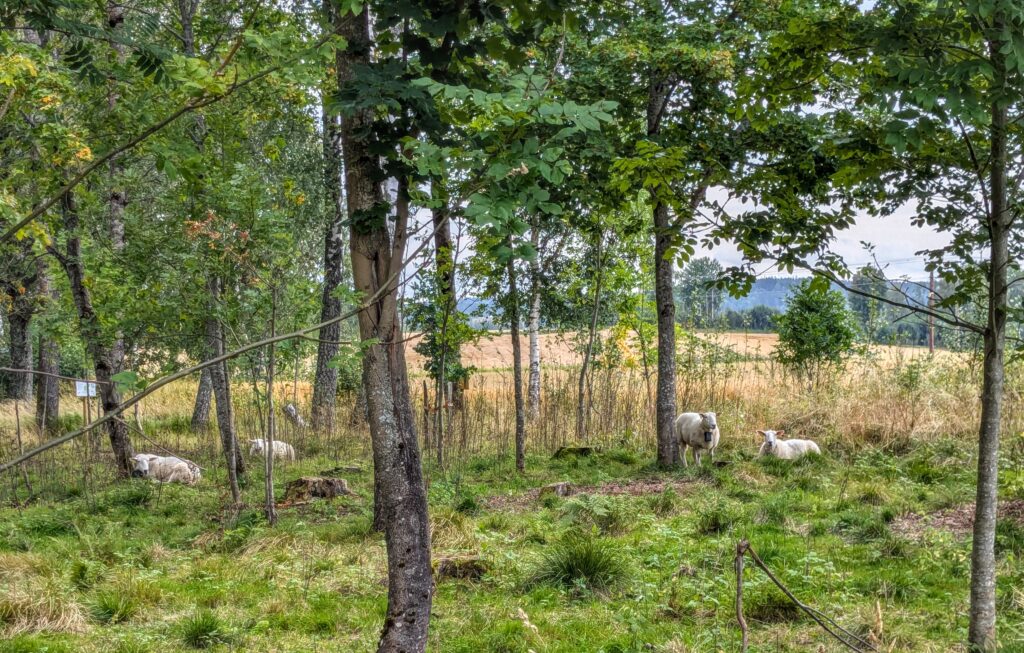
Behind the mound is a nice picnic area being used by these sheep!

And in front of the mound is this small pond. I waded out to the raft and enjoyed a few minutes of peace and relaxation!
August 27 To Jessheim (Day 335)
We had a late morning, not needing to get to the train station until after 11. We walked through town, past the unassuming entrance to Fjellhallen, behind construction fences.
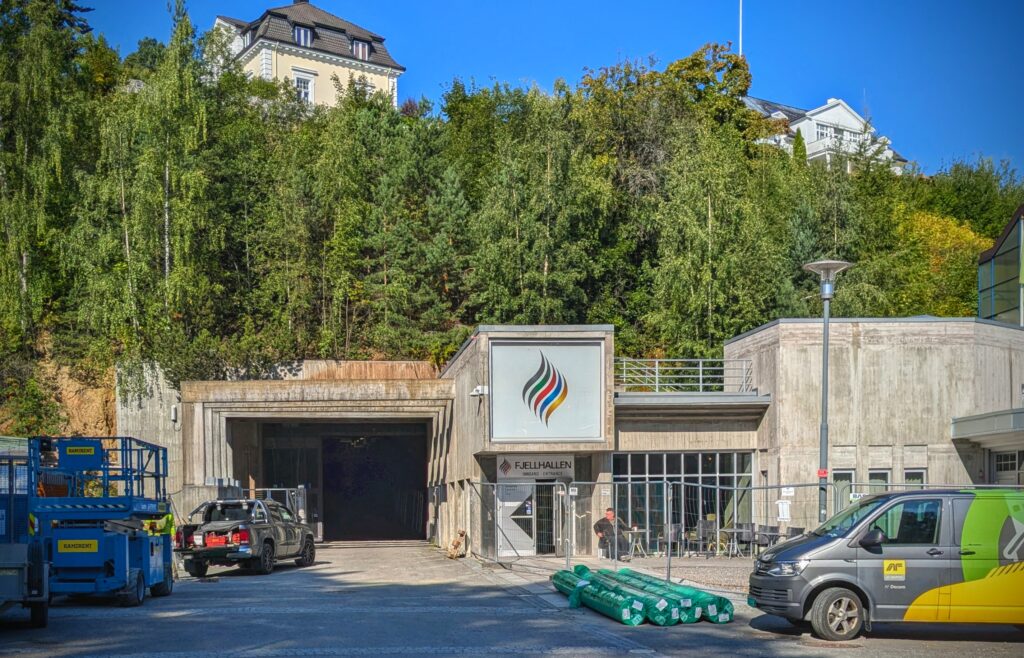
Hard to believe this is the entrance to the largest subterranean auditorium in the world!
We took our last train ride on our Eurail Pass today. We traveled 2 hours from Gjøvik south to Oslo, then caught a train for a 36 minute ride back north to Jessheim. The trip was through beautiful country, lush green Norwegian woods, following rushing rivers, past glacial lakes, but the scenery was rushing by so fast, and the train windows were dirty. Pictures would not do justice to the beauty. It must be a winter wonderland covered in snow! It got me thinking about the statue we saw in Lillehammer.

Outside the library in Lillehammer is this statue. Is it a Viking ‘berserker’ kidnapping a child? Is it a Norse God delivering a baby?
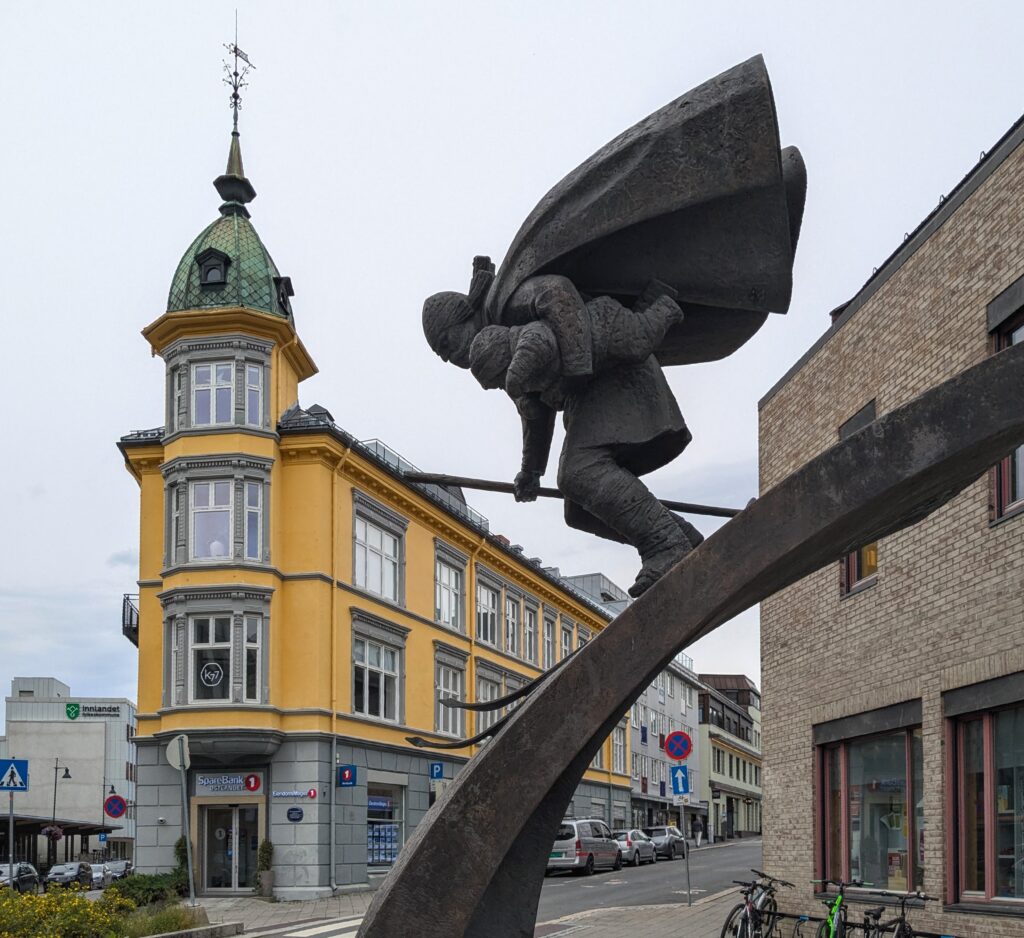
Translating the information provided, it is a ‘Birkebeiner’ known for transporting “the one-year-old Haakon Haakonsson, an heir to the Norwegian throne, safely from Lillehammer to Østerdalen to Trondheim, a long and perilous journey through treacherous mountains and forests” to save him from the opposing contender to the throne.
The Birkebeiners were a rebellious political party during the 110 year long civil war era in Norway, from to 1130 to 1240. The name has its origins in propaganda from the established party that the rebels were so poor that they made their shoes of birch bark, ‘birkebeiner’ translating to ‘birch bones’. Although originally derogatory, the opposition adopted the Birkebeiner name for themselves, and continued using it after they came to power in 1184. The rescue of the infant Prince is commemorated now in cross country ski races around the country, and even in the US, occurring in Wisconsin, home to many Norwegian immigrants and their descendants! The American Birkebeiner is held in February in Hayward, WI.
August 26 Skibladner (Day 334)
We headed back to the downtown today to find a thrift store to donate some summer clothes we no longer want to pack around. Unfortunately the store we found will not open until tomorrow, so we went towards the lakefront. Previously we had looked for an iconic symbol of Lake Mjøsa, the Skibladner, “the world’s oldest paddle steamer in timetabled service”, but it was not at its mooring in Gjøvik at the time.
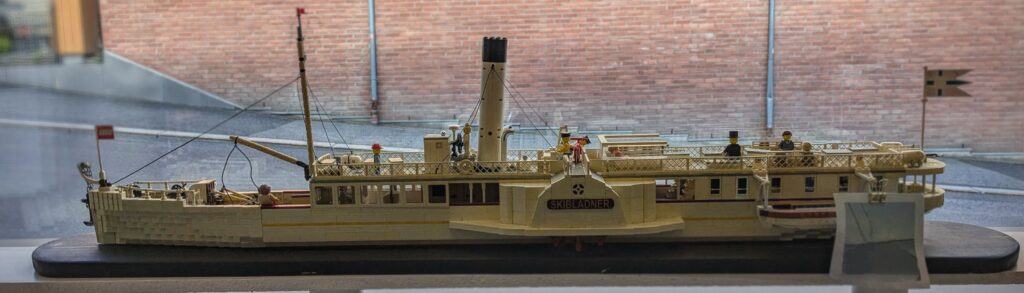
As we walked down a street towards the lake we passed this model in a window. I went inside to ask if I could take a picture, and it is the office of the company that manages the boat. On closer look, this is a LEGO Skibladner!
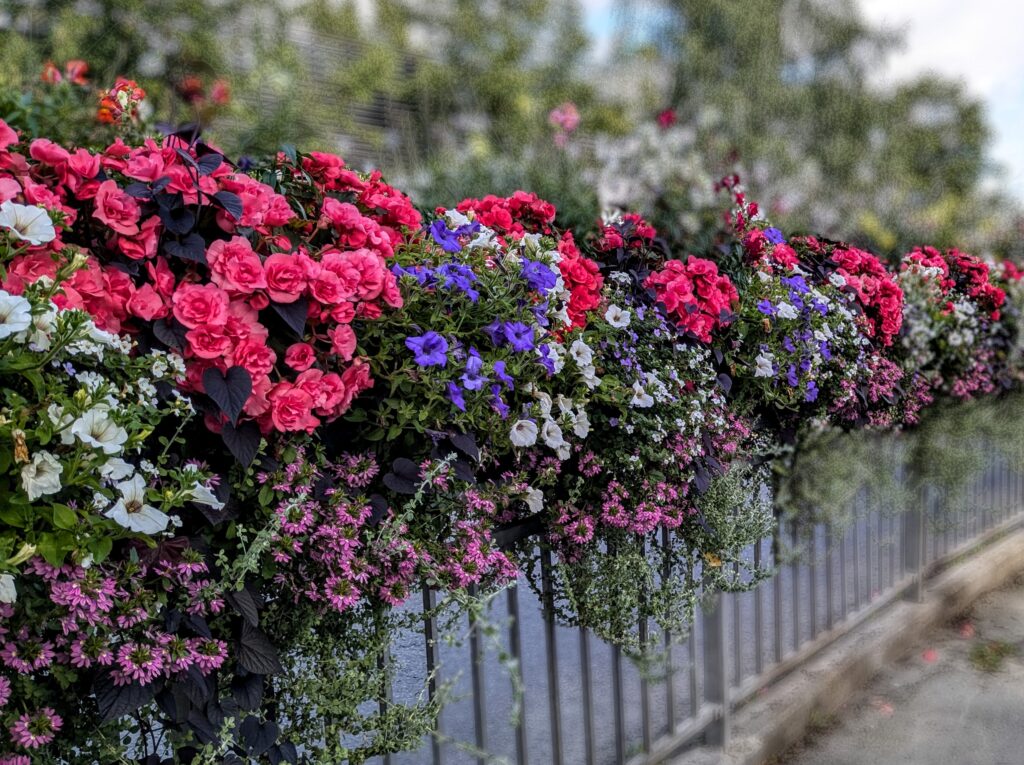
We continued to the lake past these beautiful flower boxes lining a street.

And there it was, docked and awaiting its next passengers.
Unfortunately the season for general passengers ended on August 18, it would need to be chartered for a private cruise until September when it is moored for the winter under a special glass-roofed boat house nearby!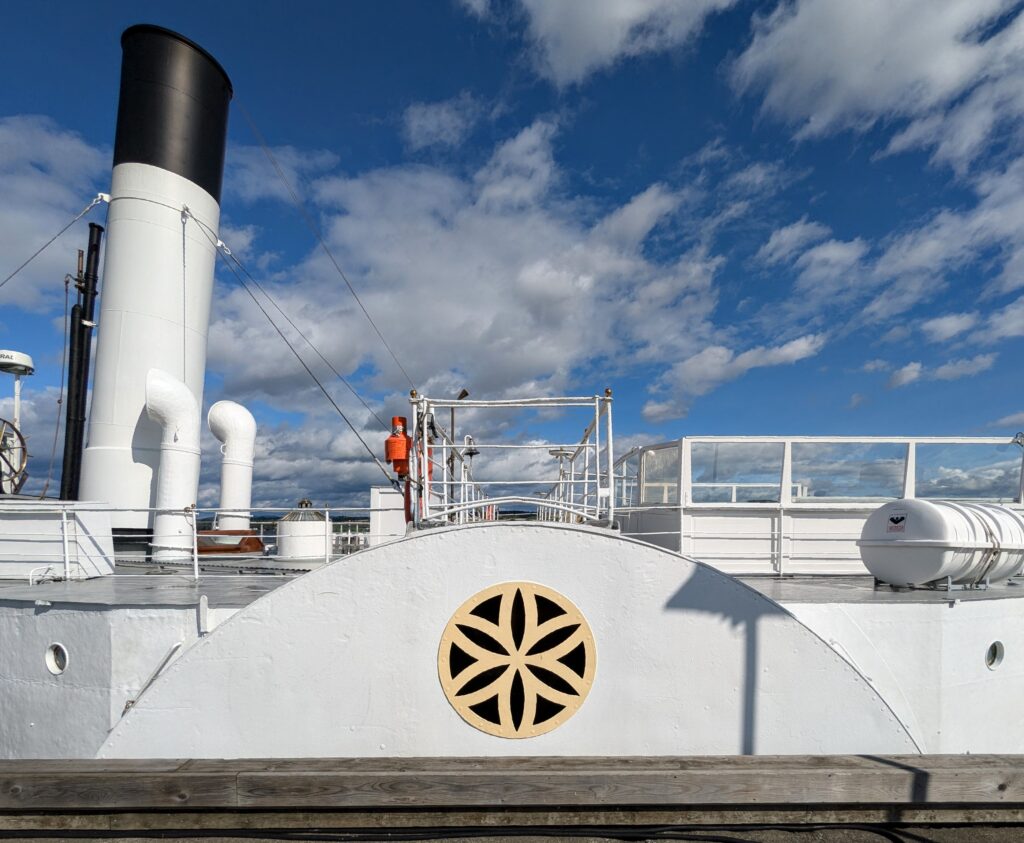 It’s a beautiful boat with wonderful symmetry, but much smaller than we expected!

We have passed this building almost every time we’ve gone downtown and I finally got a picture of it. It extends almost a full block behind this double cornered entrance. I just thought it is a beautiful building, very eclectic.