Jan 27, 2026 Kepler Track
A beautiful day led us to a hike on part of the Kepler Track, a multi-day ‘Great Walks of NZ’. This walk took us on a different part of the same route as yesterday, along the Waiau river towards Lake Manapouri, opposite the shore where we are staying in a cabin. We started our walk at Rainbow Reach Bridge, a swingbridge over the Waiau river.
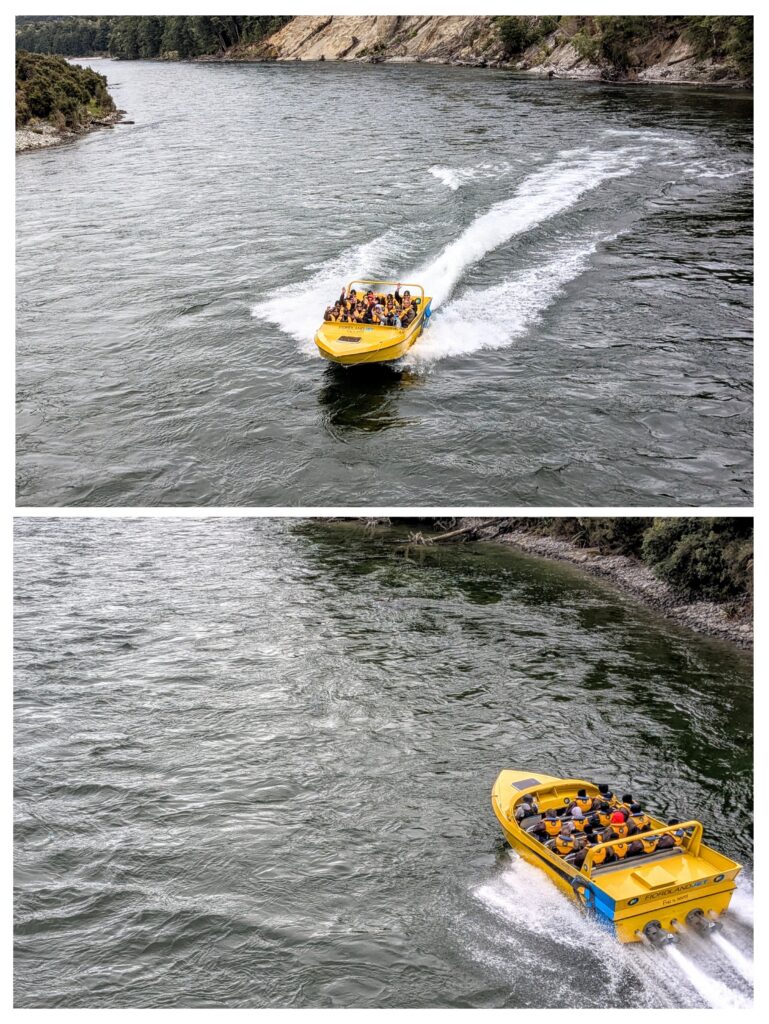
We happened to cross just when the River Jet Boat tour was zooming under the bridge! For a video check out the YouTube channel HERE!
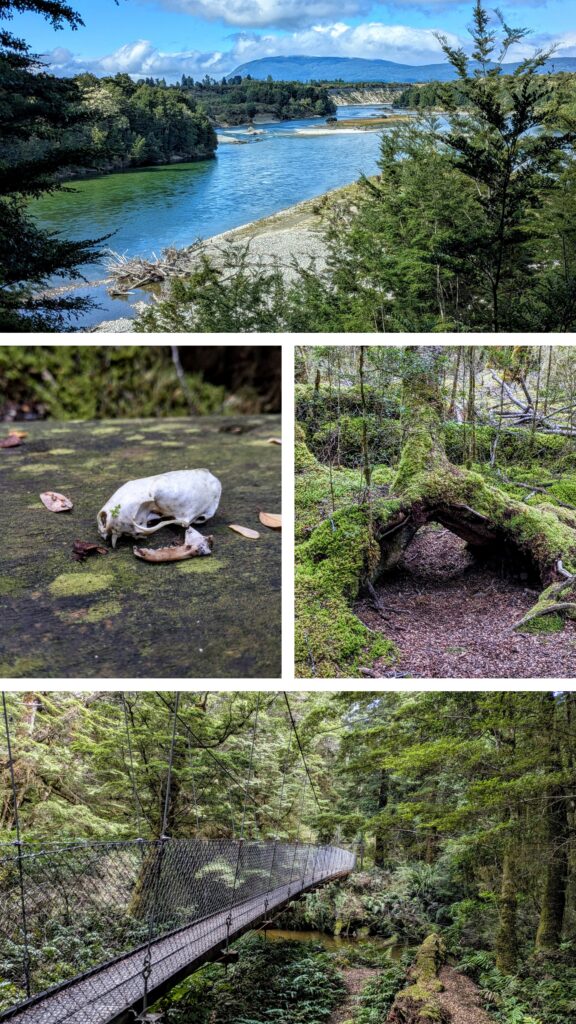
Back into the emerald green forest, with occasional views high above the river towards distant mountains, interesting natural features and another swingbridge! We also found the skull of a stoat, known as the short-tailed weasel or ermine in North America, on top of the trap that probably killed it! The stoat was purposely introduced to NZ to control the rodents that had accidentally been introduced. Unfortunately the weasel found it much easier to prey on the flightless and flying birds of NZ that had no land mammal predators at all and were helpless in the face of this aggressive new threat. There are big wooden traps on almost every trail to trap stoats, ferrets and special traps for the larger possums, introduced for the fur trade in the 1850’s through the early 1900’s. A country wide effort is underway to make make NZ predator free by 2050, an ambitious goal that is highlighted in THIS ARTICLE.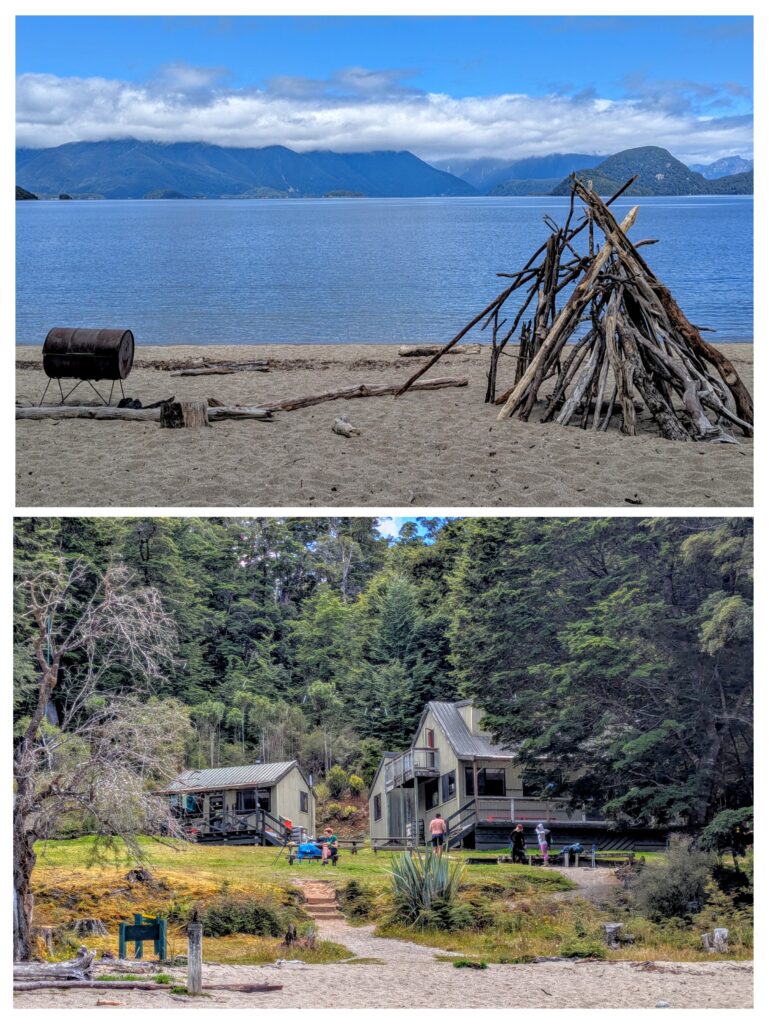
We reached our goal of the Moturau Hut on the shore of Lake Manapouri, where we ate lunch and watched the ‘trampers’, the hikers who were mostly on the last day of their Kepler Track adventure. The smaller ‘hut’ on the left is for the guides (or rangers?). The NZ Walks are so popular that your space in the huts along the routes need to be booked well in advance and ‘free’ camping in the forest is not allowed! Cooking facilities, ‘long drop’ toilets and bunks with mattresses are provided, along with a wood stove to heat the hut and lots of firewood! This hut has a fantastic view across the lake, and even a barrel BBQ grill in the beach!
Jan 26, 2026 Jewel in an Emerald Forest
We walked a trail along the Waiau river that flows between Lake Te Anau and Lake Manapouri, through a beech forest of huge trees shading the forest floor covered in ferns or emerald green moss.
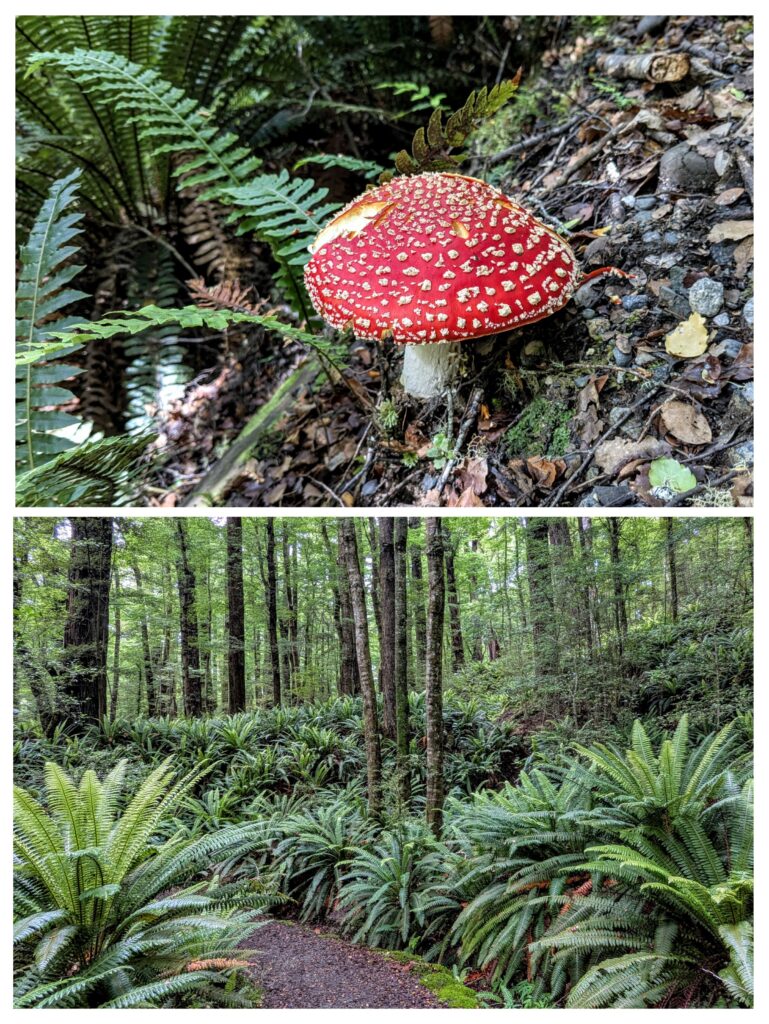
We spotted this lone ruby red mushroom cap alongside the trail, the only one of it’s kind on our 7 mile walk!
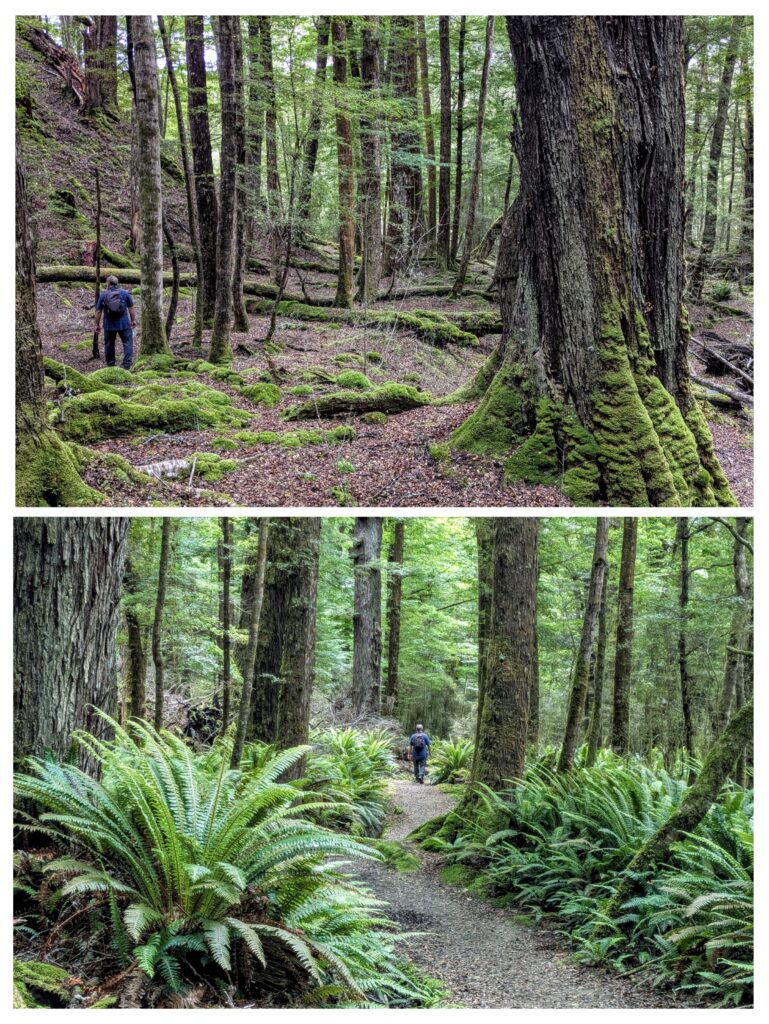
We were dwarfed by the landscape at times!
Jan 25, 2026 Scenes around Manapouri
We’ve had some rainy, cold weather but we finally got out of the cabin and walked around the tiny town of about 270 people.
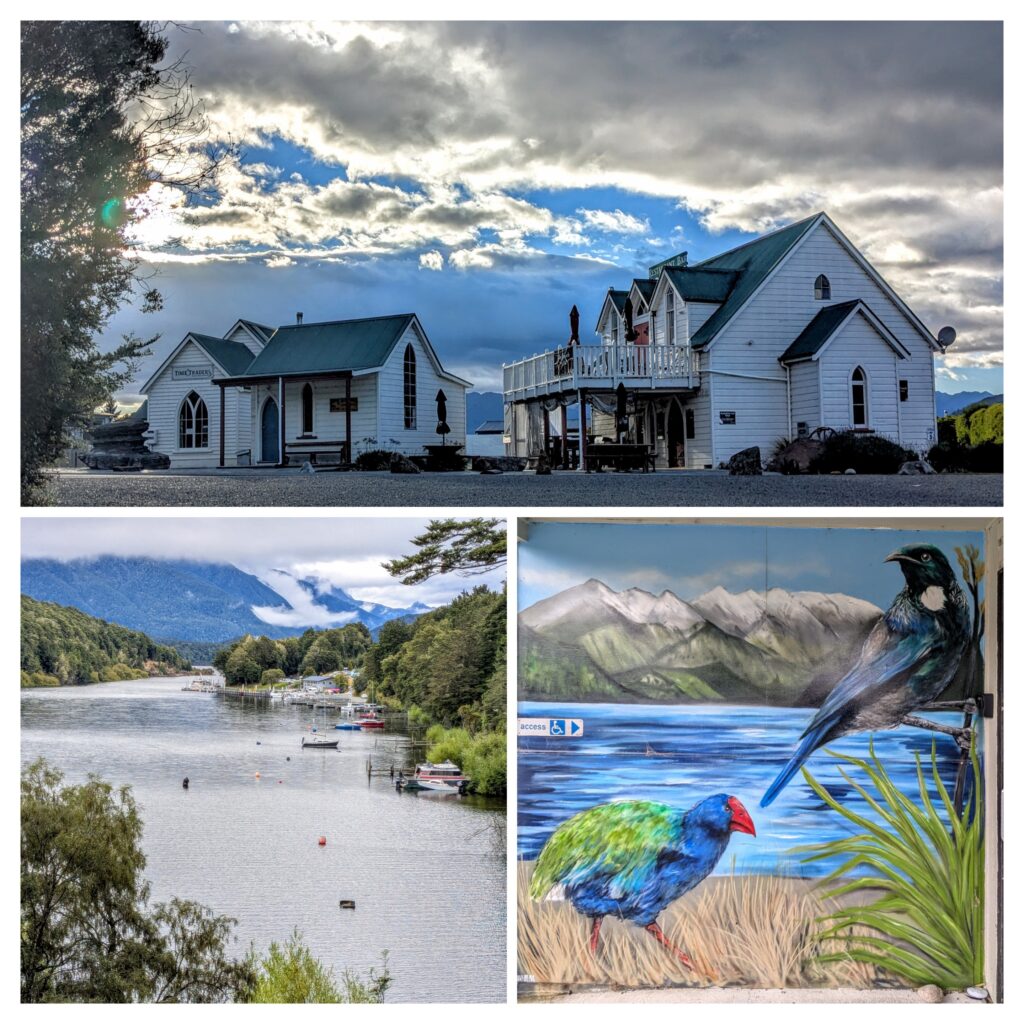
The main structures of ‘town’ appear to be an old church and related buildings. The Waiau river flows into Lake Manapouri and the dock is where tourists catch the lake ferry to travel across the lake, board a bus to travel over a pass, then board their boat for a trip of a lifetime on Doubtful Sound! The mural is on the wall of the library and displays a Tui with the white feather tufts on the throat, and a colorful Takahe. Takahe were considered extinct as of 1898 until a small population was found in the mountains nearby in 1948. They have been protected since and have recovered to about 500 birds currently.
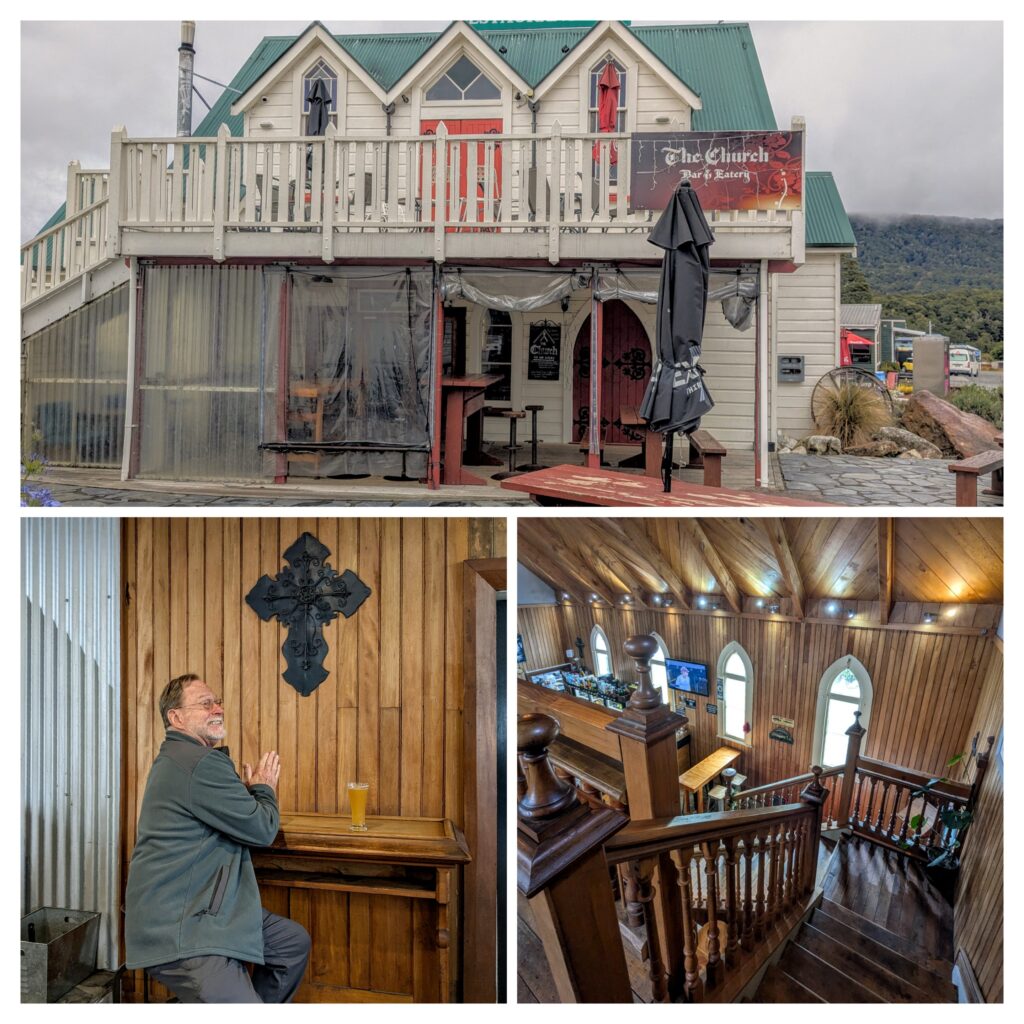
The old church building houses ‘The Church Bar and Eatery’, built about 115 years ago and beautifully restored! We enjoyed a couple of beers at the pulpit!
Jan 23, 2026 Manapouri
We arrived at our next weeks’ destination, Manapouri, gateway to Doubtful Sound and western most municipality in NZ (although there’s a lot more land further west, there are no other settlements in the Fiordlands)!
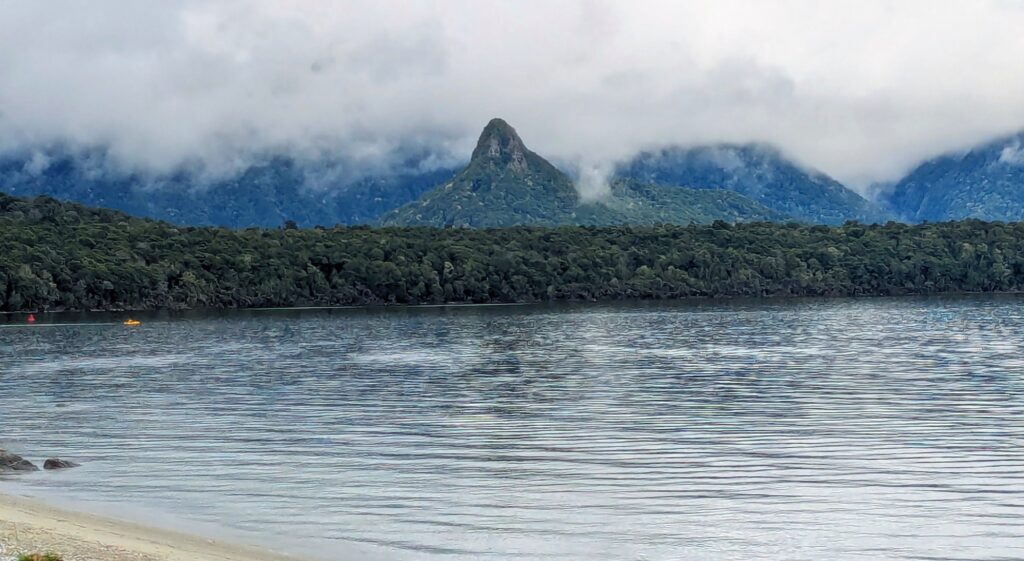
On the shore of huge Lake Manapouri, where the mists obscured the many mountains of Fiordland.
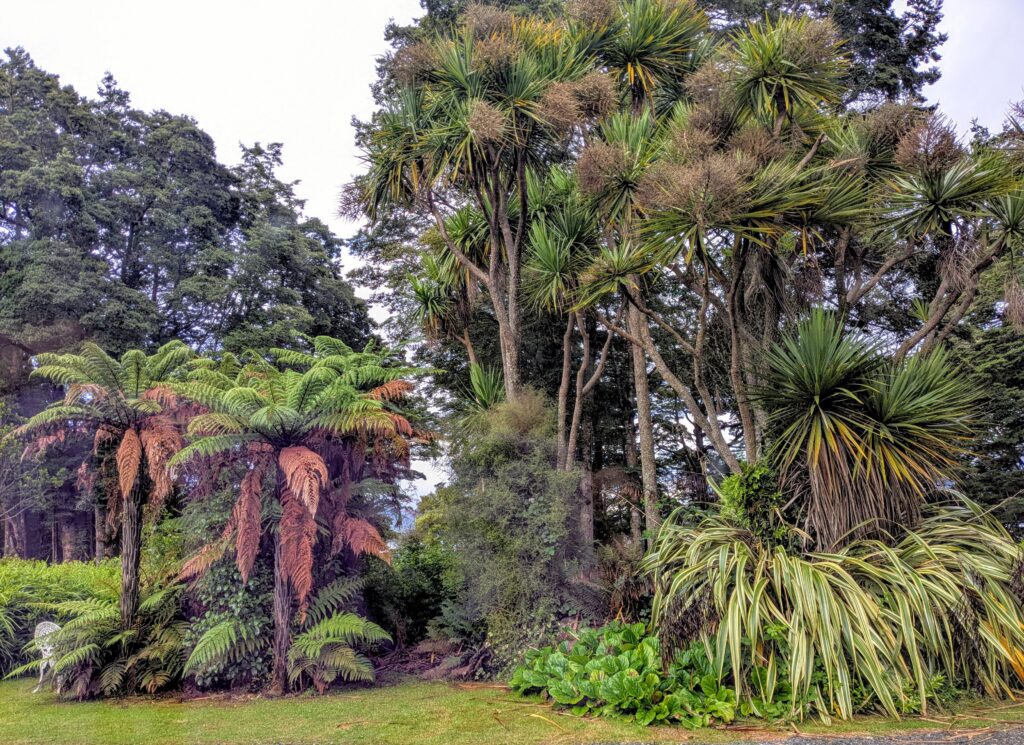
The lush vegetation across from our cabin showcases some iconic NZ plants. Tree ferns are dwarfed by huge cabbage trees, looking like multi-headed palms. Underneath is a stand of mountain flax, the bright green and white grassy-looking plant, a staple used by Maori for weaving baskets, mats, sandals and even rain-shedding capes.
Jan 22,2026 Arrowtown, A Tale of Two Cities
Continuing our travel over the Crown Range towards Queenstown we stopped in the tourist center of Arrowtown, an 1860’s gold mining town. Surrounded by mountains it is a picturesque village preserving it’s gold-mining era buildings and identity (mining tourists now!).
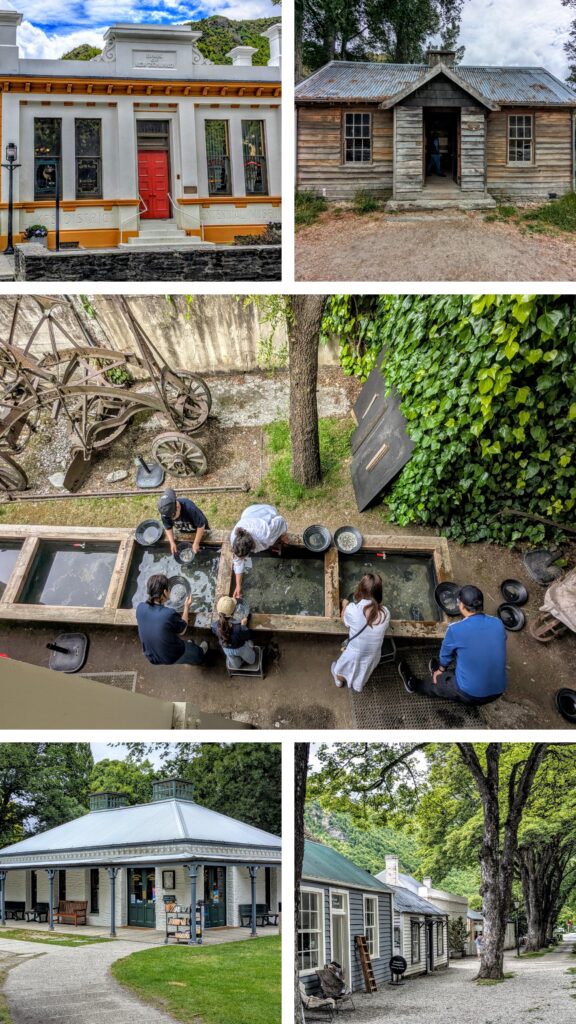
Some of the notable structures in town. The bank of New Zealand, one wooden building from the police camp, tourists ‘panning for gold’, An iconic NZ 1860’s style building housing the library and a block of simple miner’s shacks.
By the 1870’s the easy pickings were gone and the European miners moved on to new strikes elsewhere. The town shrank and resorted to inviting Chinese miners from the played-out gold fields of Australia to work the claims in Arrowtown. Invited, but not welcome, the Chinese were relegated to the fringes of the community. There they created their own space, erecting shacks utilizing discarded or natural materials. They even terraced the hillside and grew gardens, selling their extra produce to their white neighbors. The “Chinatown” has been preserved as well and plenty of signage describes life for the bachelor miners.
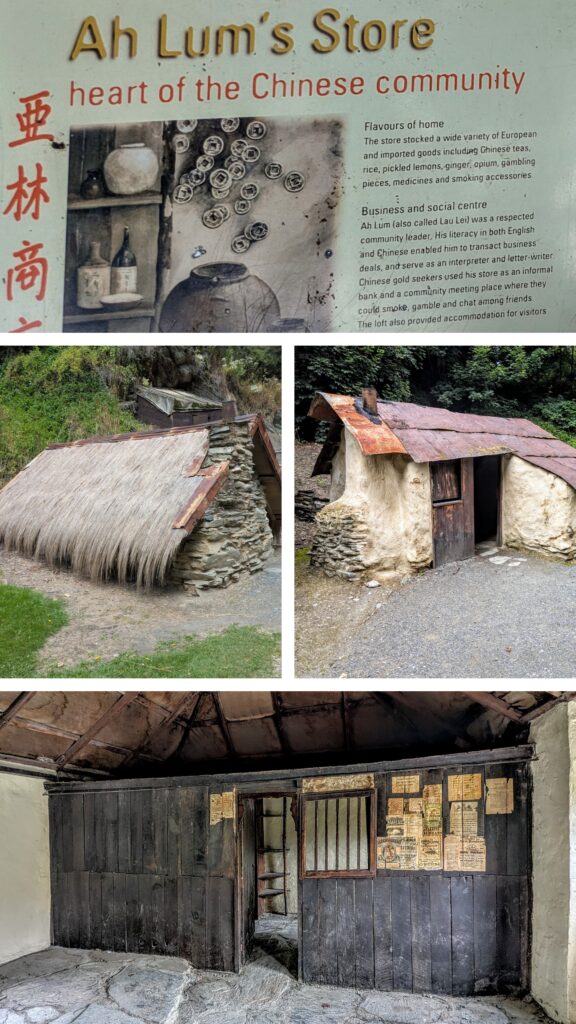
Two of the miners’ huts, one with a tin roof, the other with a thatch roof, look similar to farmers’ huts in Ireland. Ah Lum’s Store was the ‘heart of the community’.
I couldn’t help but notice the similarities to the Chinese experience in Oregon around the same timeframe. Preserved and interpreted in John Day Oregon is the Kam Wah Chung & Company Museum. Active from the late 1860’s until 1952 with the death of it’s last proprietor, Ing Hay (or ‘Doc’ Hay as he was known, being an herbalist and practitioner of traditional Chinese medicine), serving the Chinese miners who flocked to the gold fields around Canyon City, Oregon. The Chinese workers in both NZ and Central Oregon were generally from the Guangdong Province in China, and their communities were centered around stores that could provide them with familiar Chinese goods as well as social camaraderie.
