Feb 4, 2026 Taiaroa Head
A beautiful day for a drive!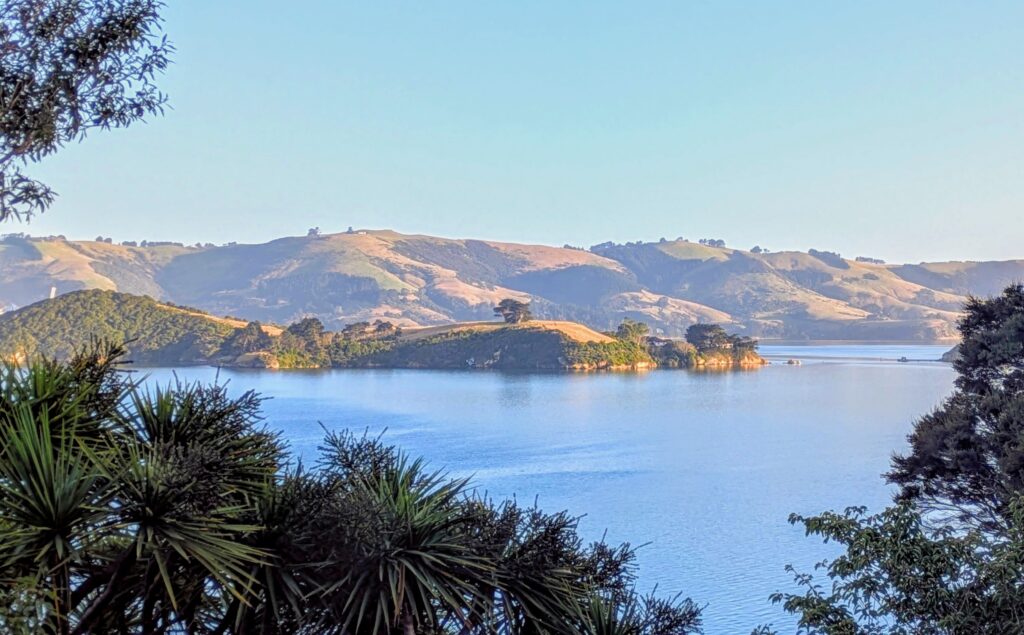
Looking across the harbor to the mainland from our deck, we decided it’s a great day for a drive along that coast!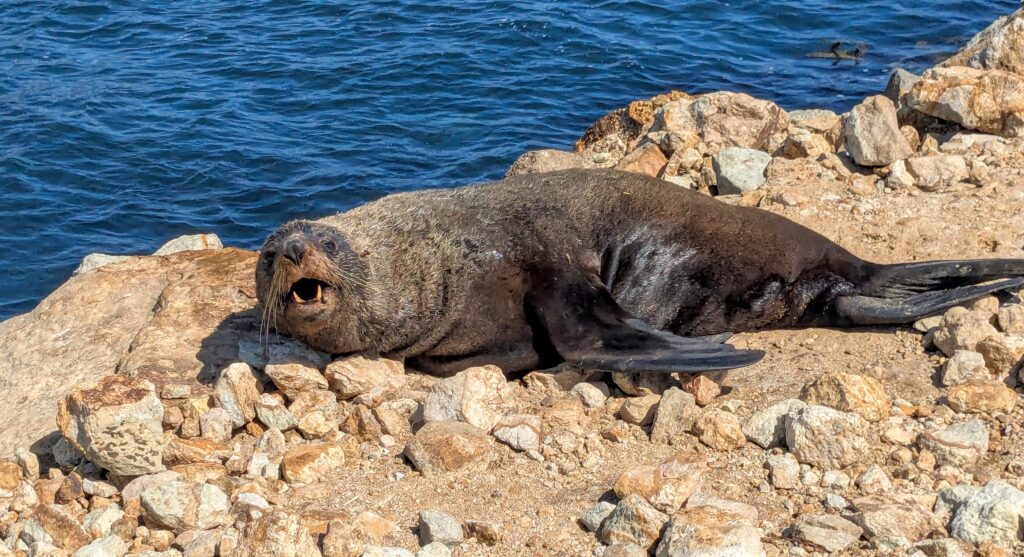
We drove out to the end of the road at Aramoana and walked out onto the manmade ‘mole’ or seawall and joined this sealion basking in the sun.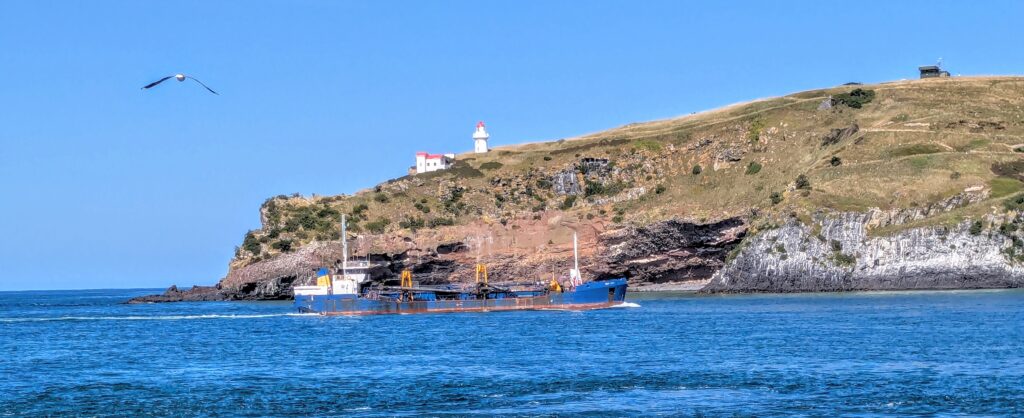
Looking across the harbor mouth at the lighthouse on Taiaroa head, we watched a ship come in, dwarfing the lighthouse! We saw tiny dots of white on the hillside which are nesting northern royal albatross. We didn’t bring our binoculars, but you can watch live-cam videos HERE! Our host worked for several years at the Royal Albatross Centre at Taiaroa Head and we enjoyed sharing our biology and bird care backgrounds!
Feb 2, 2026 Tui
Our host provides liquid food for the many birds that visit the lush garden planted on the slope down to the road and the banks of the harbor. The tui came in frequently for drinks and we finally got a great picture!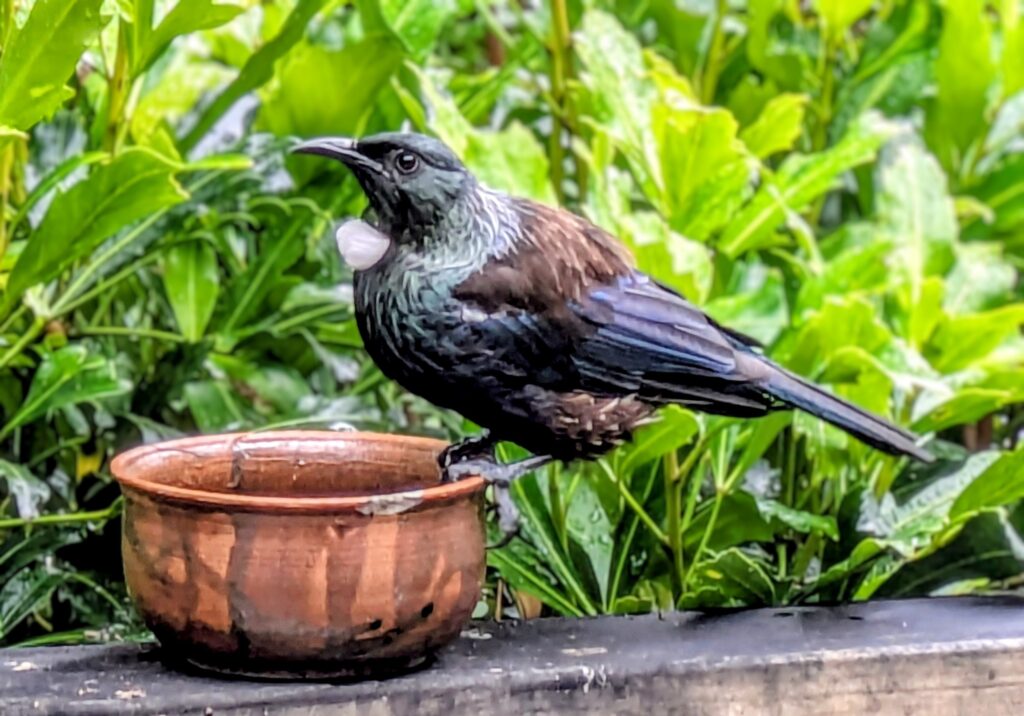
Feb 1, 2026 Far above Dunedin
We hiked the Flagstaff trail high above Dunedin today.
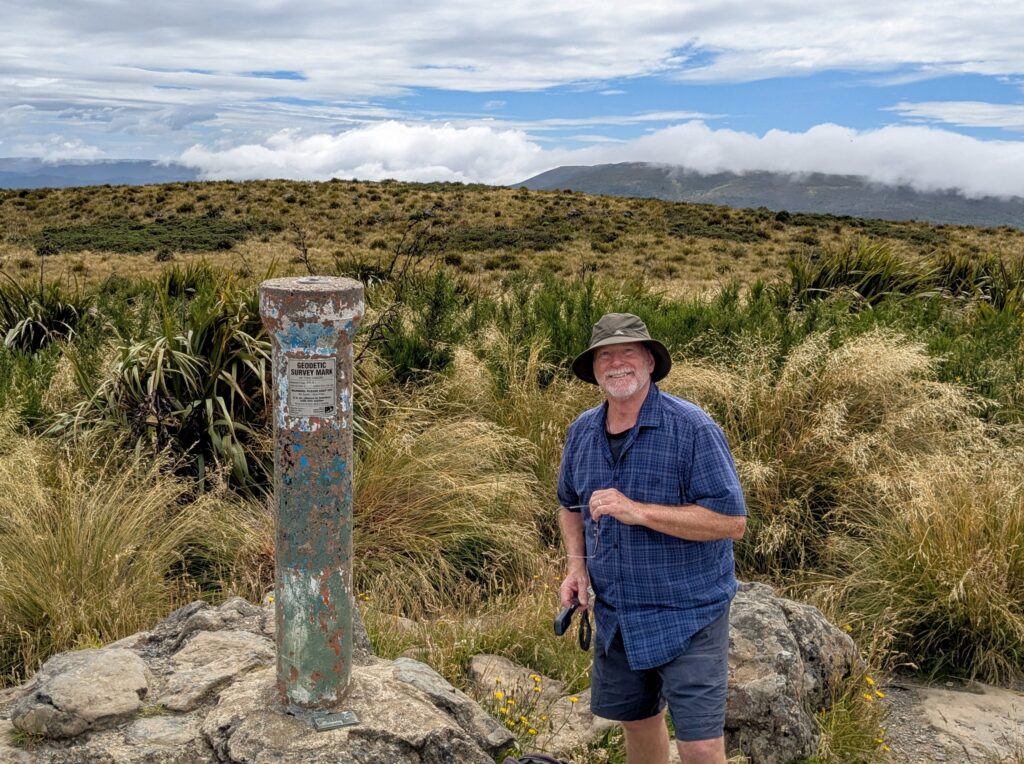
It is a well-formed track, with lots of hikers and joggers, on this Sunday at least! Rather steep to get up to the top, then sloping more gradually down the back of the hill.
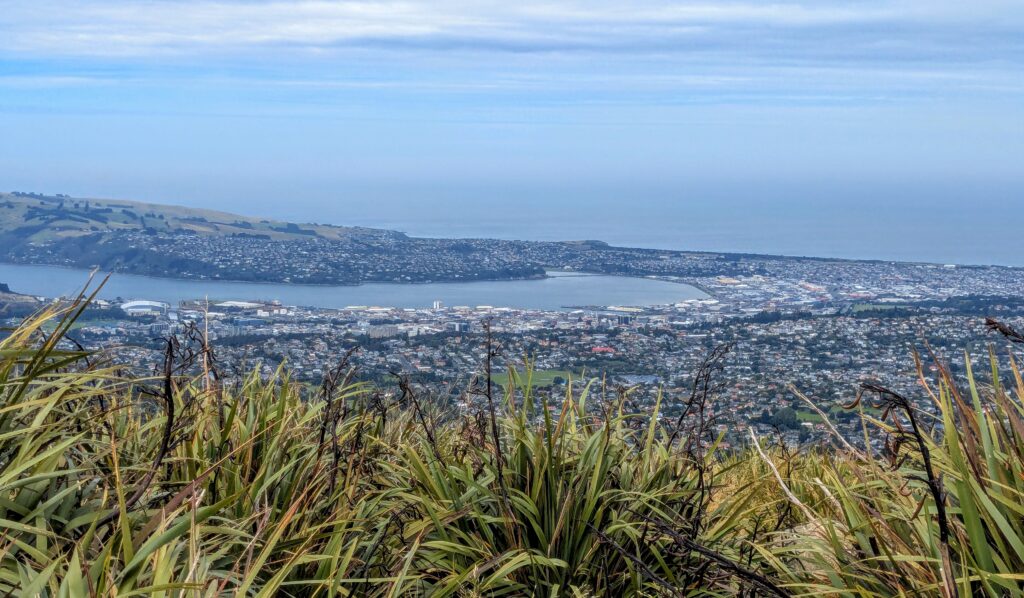
Looking down on Dunedin, spread out around the end of Otago Harbour.
Māori first settled in the area around 1300. European whalers and sealers began arriving in the early 1800’s and by the late 1830’s the harbor had become an international whaling port. Dunedin itself was established in 1848 by the Lay Association of the Free Church of Scotland. By the end of the 1850’s about 12,ooo Scots had emigrated to Dunedin, NZ. The 1860’s brought a Gold Rush that swelled the population with international immigrants and by the mid 1870’s Dunedin was the largest city in NZ with a population of almost 30,000! Eventually overtaken in population and recognition by Auckland and Christchurch, Dunedin can still boast that it is the home of the University of Otago, the oldest university in NZ, established in 1869.
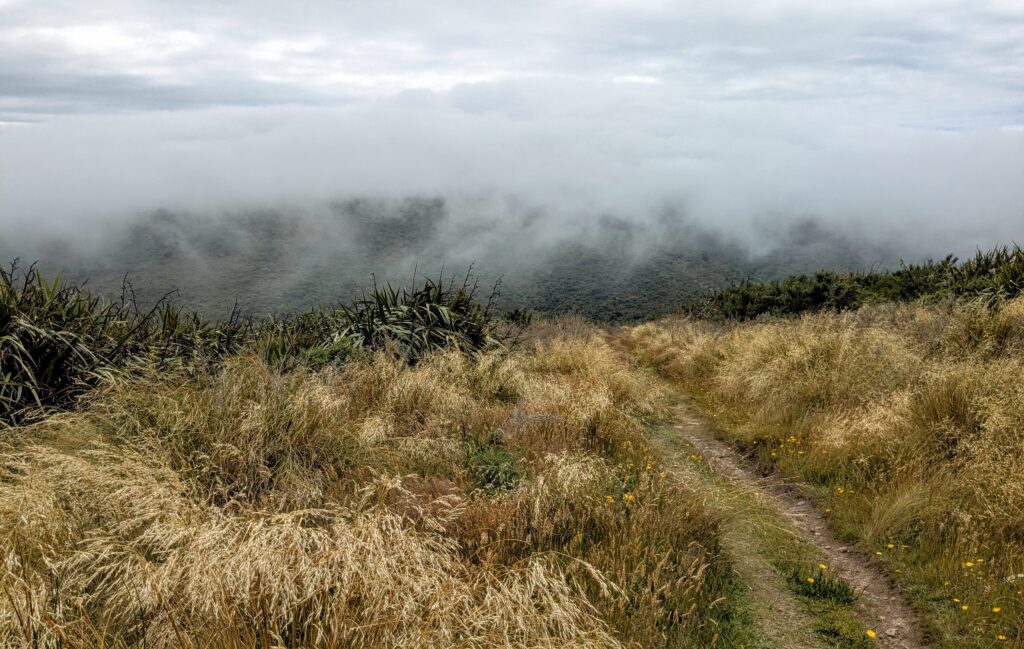
As low clouds began sweeping over the hills, we decided to head back down before we were overtaken by the mist!
Jan 31, 2026 Okia Reserve
A short drive across a narrow section of the Otago Peninsula brought us to Okia Reserve, which we visited on Feb 16, 2023! We explored the reserve more thoroughly this time! We hiked the farm road into the Reserve between 2 ‘pyramids’ of volcanic columnar basalt, like the volcanic rock around Bend!
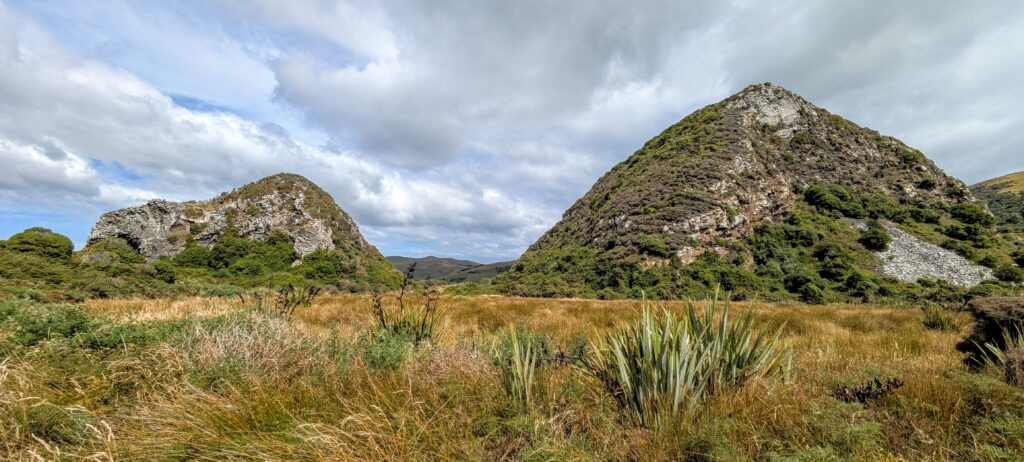
Looking back at the ‘pyramids’ as we continue on to Victory Beach.
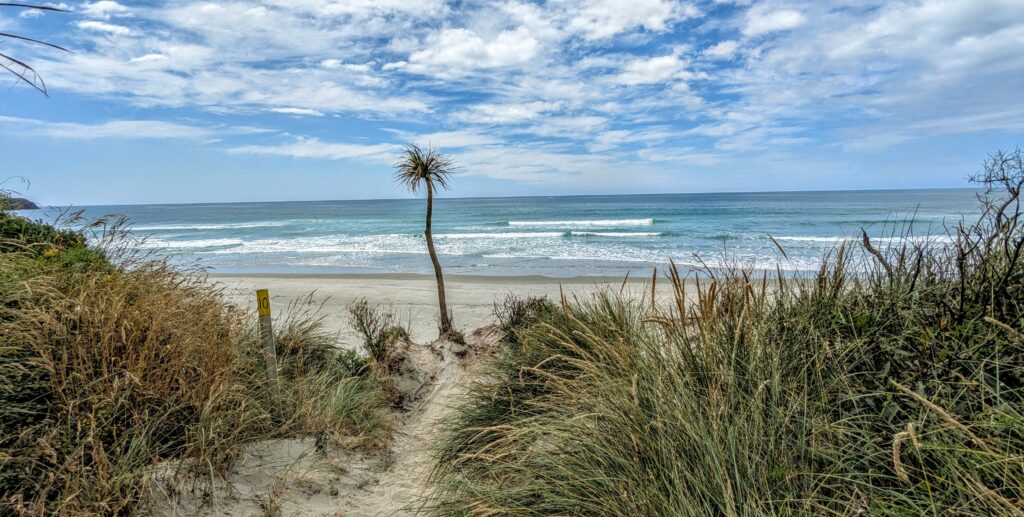
The Pacific Ocean! We saw one lone sea lion basking on a bed of kelp in the sand. We thought it might be dead, but it lazily scooped sand onto it’s belly, to cool off maybe?
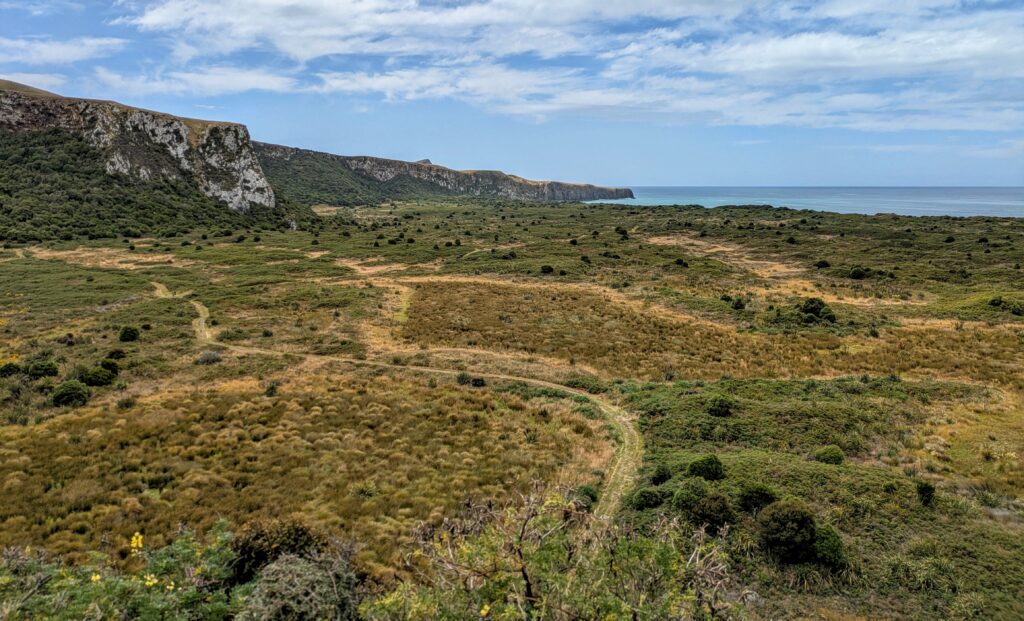
Returning to the pyramids on the loop trail, we climbed up the little pyramid to get great views. The cliffsides in the distance are home to the last remnants of the native forest on the peninsula. The area is a reserve in order to protect the yellow-eyed penguin, one of the rarest penguins, with less than 7,000 left. They nest in the dunes along the beach, but fewer pairs return each year. We did not encounter any penguins.
Jan 30, 2026 Otago Peninsula
Our next B&B is on the Otago Peninsula, a short curvy drive along the west shore of Otago Harbour, the long harbor leading out to sea from Dunedin.
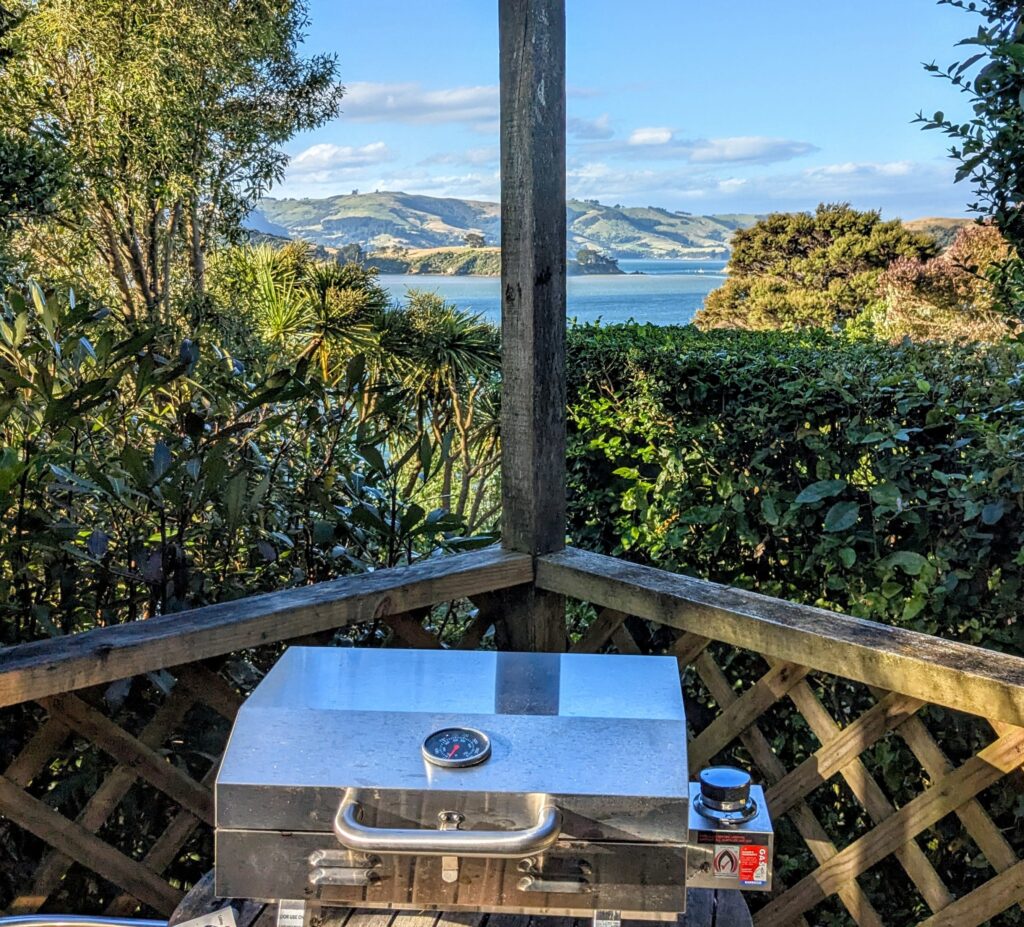
The view from the deck of our tiny house, with the grill set up for fresh fish!
We took a drive into Dunedin to walk around the Botanic Garden. We like to explore the Botanic Gardens in any city we visit, always a highlight of a trip into a city!
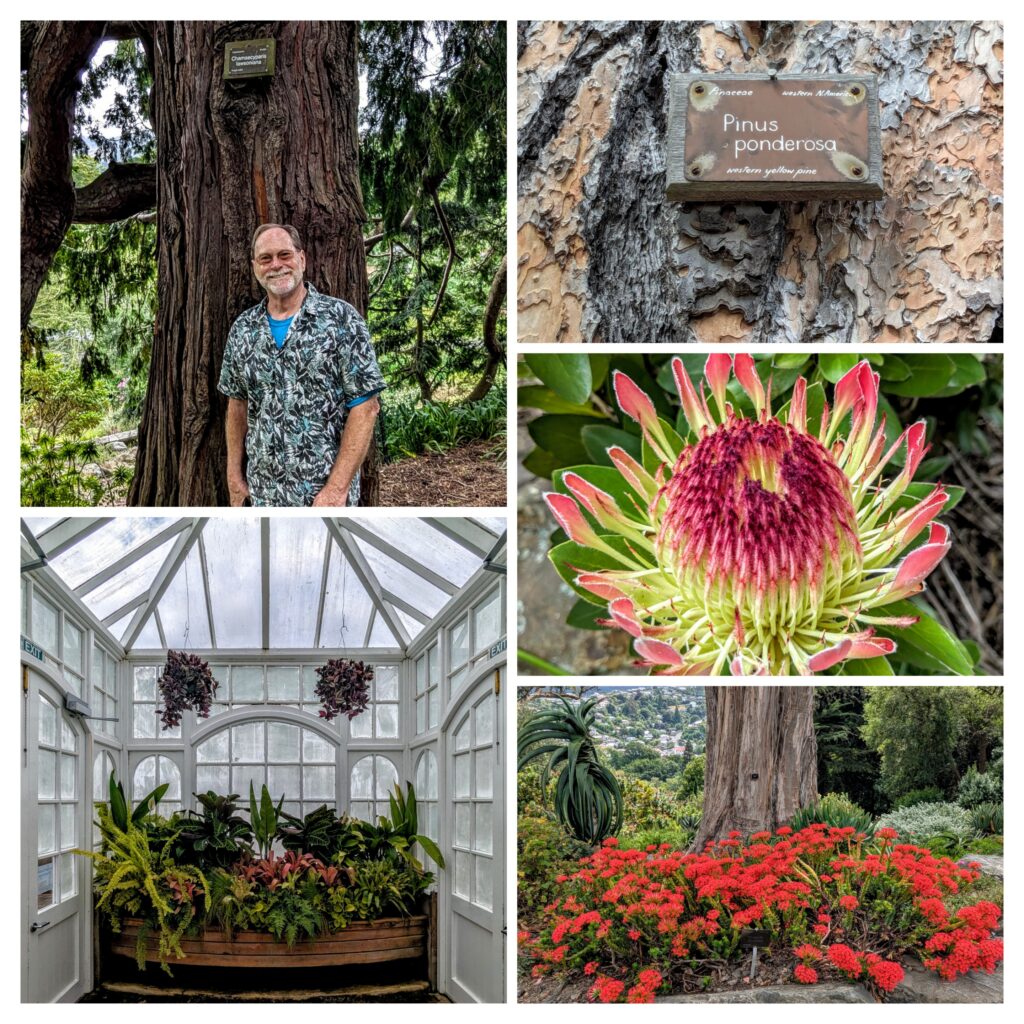
We found many familiar trees, including California redwoods, ponderosa pines and the Oregon cedar Robert is standing under. All pines in NZ are non-native. Lots of plants from around the world are displayed in themed gardens such as the Mediterranean or South African Gardens, as well as more tropical or desert plants in the Victorian era greenhouse.
