Monument Valley
No words can do justice;

Moonrise over the Mittens, shadow of one mitten on the other.
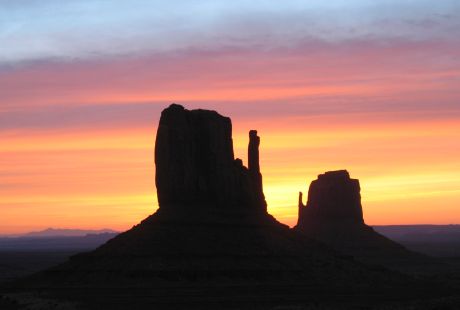
Waking up to the sunrise behind the Mittens, view from our window.

No words can do justice;
Moonrise over the Mittens, shadow of one mitten on the other.
Waking up to the sunrise behind the Mittens, view from our window.
We explored Monument Valley, in the Navajo Nation Tribal Park, by motorcycle and by foot over a day and a half. We had great weather and a priceless view from the camper window overlooking the ‘Mittens’.
 Robert & motorcycle at John Ford’s Point Overlook. Monument Valley may look familiar to fans of John Ford’s westerns. Great stills from those movies can be viewed by clicking here.
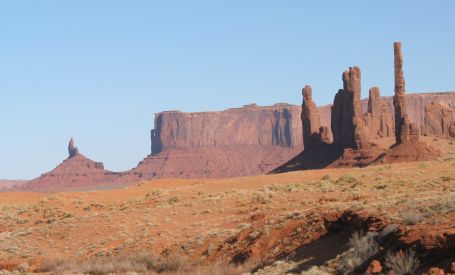
Totem Pole and Yei Bi Chei 'monuments'.
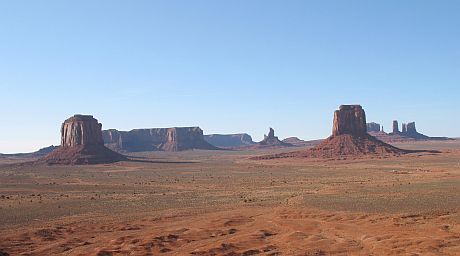
Artist's Point Overlook.
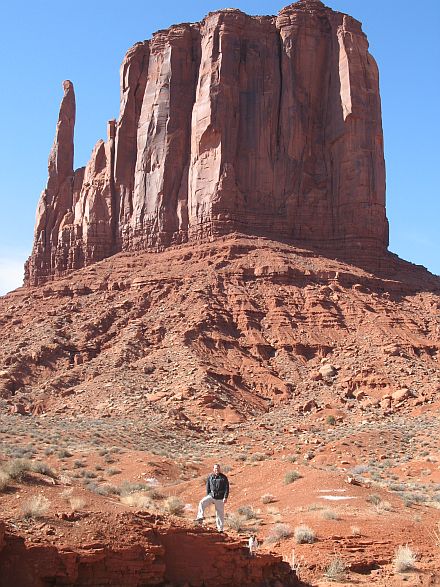
Robert & Mavrik hiking around West Mitten.
Construction on Navajo Bridge was begun in 1927 and completed in 1929, replacing Lee’s Ferry as the safest crossing of the Colorado for 200 miles. There is a great visitors center explaining the history and the newest nearby residents – California Condors! Releases of Condors in the area began in 1996 and they have been roosting on and under Navajo Bridge lately. It’s a great place to see one of the most magnificent and endangered animals in the U.S. Interestingly, the first wild release of Condors was conducted in the Los Padres National Forest near Big Sur on the California coast, very near our favorite ‘wide spot on the road’ camping site, but we’ve never seen them there.
 You can walk across the original 1929 bridge. The new vehicle bridge is on the left, with the unique visitor center in between.
 Rafters floating under the bridge on their way into the Grand Canyon. This is the last of ‘civilization’ they will see until the foot bridges deep in the Grand Canyon!
 An immature Condor roosting on the cliff under the bridge.
Lonely Dell was the name given to the home and ranch that housed the families that ran the ferry over the years. They were very isolated and needed to grow and raise their own food. With lots of hard work and irrigation from the Paria river they farmed many acres.

Some original buildings from circa 1880.
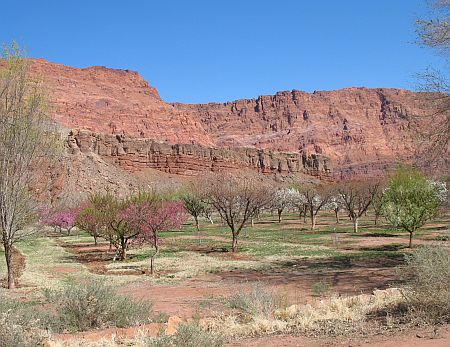
The orchard is in bloom.

A current resident of Lonely Dell.

The Paria river flowing past Lonely Dell.
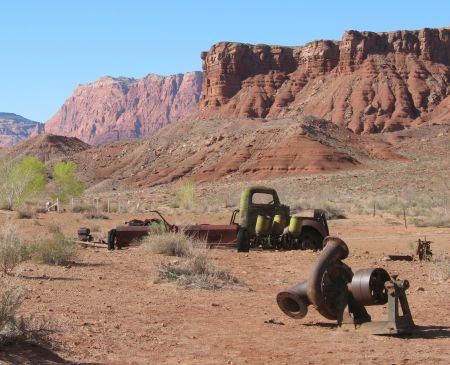
On a chilly, blustery day we continued our journey across Glen Canyon Dam into Page, Arizona where we re-supplied. From there we ascended Echo cliffs, then descended the other side to sunshine and warmth at Lee’s Ferry on the Colorado river. From 1870 to 1929 Lee’s Ferry was the only relatively safe place to cross the Colorado river for 600 miles! Now it’s part of Glen Canyon National Recreation Area and the launch point for raft trips on the Colorado river through the Grand Canyon.
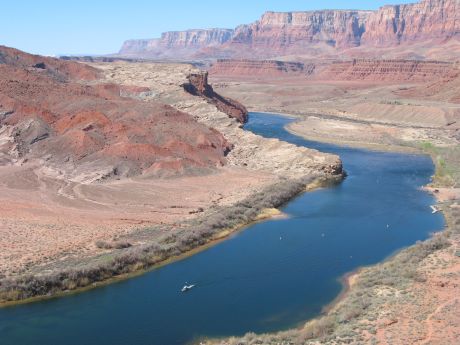
Looking down on the Colorado River from a steep trail. There were 3 different sites for the ferry, since they were flooded and washed away periodically.
 Looking left, or upstream, you can see the wagon road descending to the river at the site of 1 of the 3 ferry crossings.
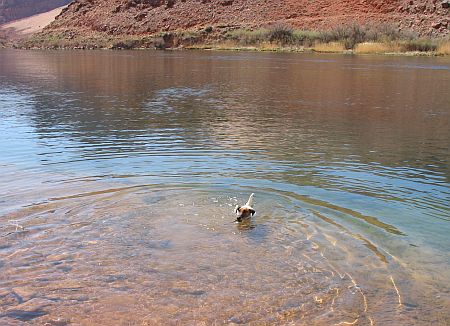

Looking across the Colorado from just below the campground. The milky colored water in the foreground is the silty Paria river flowing into the clear water of the Colorado. Glen Canyon Dam completely changed the quality of the Colorado river water, filtering out the massive amount of red silt collected from the huge watershed.

Sunset on “Lee’s Backbone”. Pioneers built an amazing wagon road on the face of the cliff to get to Lee’s Ferry.